DON'T MISS ANY OF
MY BLOG POSTS
Enter your Email


Preview

Where Does
The Reluctant Gourmet
Shop Online?
Amazon.com
amazon.com


culinary school

Contributing Writers

Lola Baldwin
Jenni Field
Mark Vogel


LG Electronics


How Do You Know When The Meat Is Done?

November 16th, 2007 by RG in Cooking Tips

The Importance of Internal Cooking Temperatures

Meat Doneness

You may have seen my blog on wood burning ovens  describing the oven we just installed on our patio. I have been having fun with it making pizza but also trying my hand at roasting meat and over night slow cooking using the oven’s residual heat. It has been quite a learning curve but a lot of fun with some great results.

One detail I’ve learned in the past two weeks about cooking is the importance of knowing the internal temperature of what you are cooking.  Not that I didn’t already know this about cooking but when you can’t accurately regulate the temperature of the oven like you can with a conventional oven, you really depend on knowing the internal temperature.

See my meat doneness chart for internal cooking temperatures.

Forget About Cooking Times

With most recipes, they tell you how long to cook something and at what temperature. Just look through any cookbook. If roasting they tell you to preheat the oven to a certain temperature and roast for so many minutes. If grilling they tell you start at the highest temperature for so many minutes and then finish on the cooler part of the grill for so many minutes. The same is true for sautéing, braising or whatever other way you like to cook.

This is all great if everyone’s oven or grill were exactly the same. How about different sizes of what you are cooking? The recipe might be for a 2-inch thick chop but you purchased a 1 ¼ chop. They tested the recipe in a heavy bottomed copper pan over a commercial grade Viking stove top but you own less expensive cookware and cook on a GE electric range. These factors will all effect the cooking times and final results.

Rare, Medium-Rare, Medium, Medium-Well

Don’t believe you can’t get your steaks to the exact doneness you like and can only get results like that in a restaurant. Heck, how many times have you ordered a steak medium-rare and it comes out medium-well? Do you send it back? (That’s a question for another post)

Most home cooks have learned to cook using time and external temperature as our guide. It’s easy and so what if the meat is a little overcooked. How many of you purposely-undercooked meat, knowing you can throw it back on the heat? Or have overcooked it using the excuse, “I want to make sure it’s safe”? I know I have.

Taking The Guesswork Out

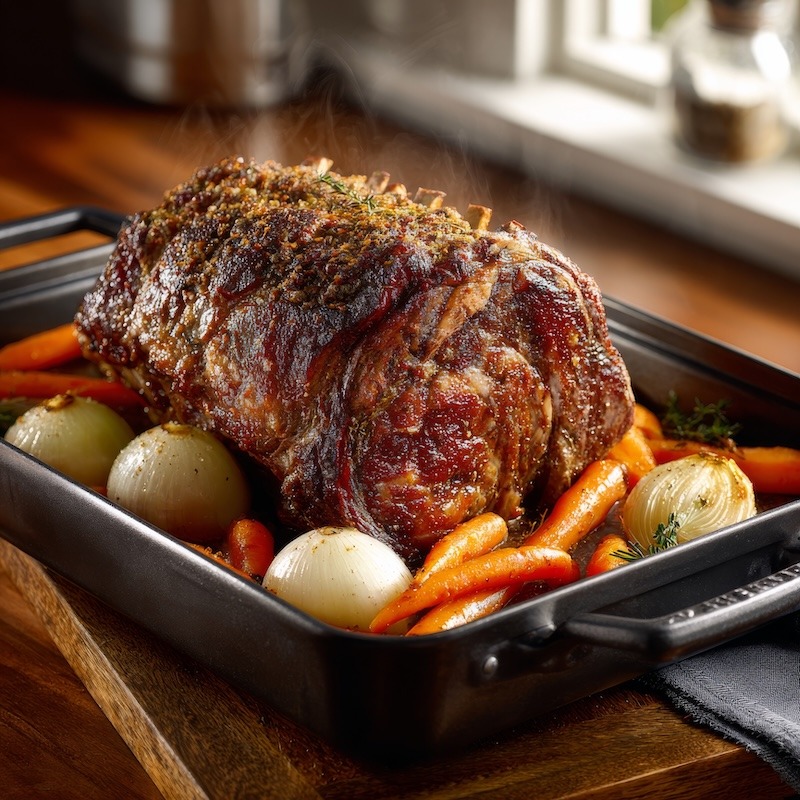
Cooking in a wood-burning oven, where I find it almost impossible to keep the heat source constant, there is a lesson to be learned. The lesson is knowing the desired internal temperature of what I am cooking and using an instant thermometer to monitor it. I learned this when cooking a pork roast last weekend.

Do You Use An Instant Thermometer? Take a Poll at My New Cooking Community Forum

I can’t set the oven to 350º or 400º F and cook the roast for 15 minutes per pound, as many recipes will tell you. Each time I put a log on the fire to keep it burning, the temperature in the oven changes. Instead, I try to keep a somewhat constant temperature but monitor the pork roast’s internal temperature until it reaches my target of 150º F knowing it will reach my ideal internal temperature of 160º F after resting.

What’s This About Resting?

(more…)


Getting Your Kids To Eat What You Cook

October 18th, 2007 by RG in Cookbooks & Magazines, Cooking Tips, Food & Cooking

How to Help Your Kids Enjoy New & Different Types of Food

I receive a lot of emails on this subject and have a few ideas that I try to relate but this week I read an article in the Philadelphia Inquire by Karen Heller about a new cookbook by Jessica Seinfeld, the wife of actor / comedian Jerry Seinfeld called Deceptively Delicious: Simple Secrets to Get Your Kids to Eat Good Food.

Deceptively Delicious Cookbook for Kids

The article, Mrs. Seinfeld’s recipe to raise picky eaters, is a great read, informative and humorous itself, but I was more interested in Karen Heller’s own “tricks” to get children to eat more adventurous foods at the end of the article. They are right on.

Not that there is anything wrong with Jessica Seinfeld’s methods, they just differ with Ms. Heller’s philosophy. I have not read Mrs. Seinfeld’s book yet so I will reserve my editorial to a later date.

Start Early

Ms. Heller suggests presenting “interesting food to children” as early as possible so they are “more likely to adopt an interesting diet”. I couldn’t agree more. It’s not easy, but I ask my kids to at least try everything I prepare and if they don’t like it, which is more often than not, they can spit it out in my hand. Sometimes I think they fake not liking it just so they can spit in my hand.

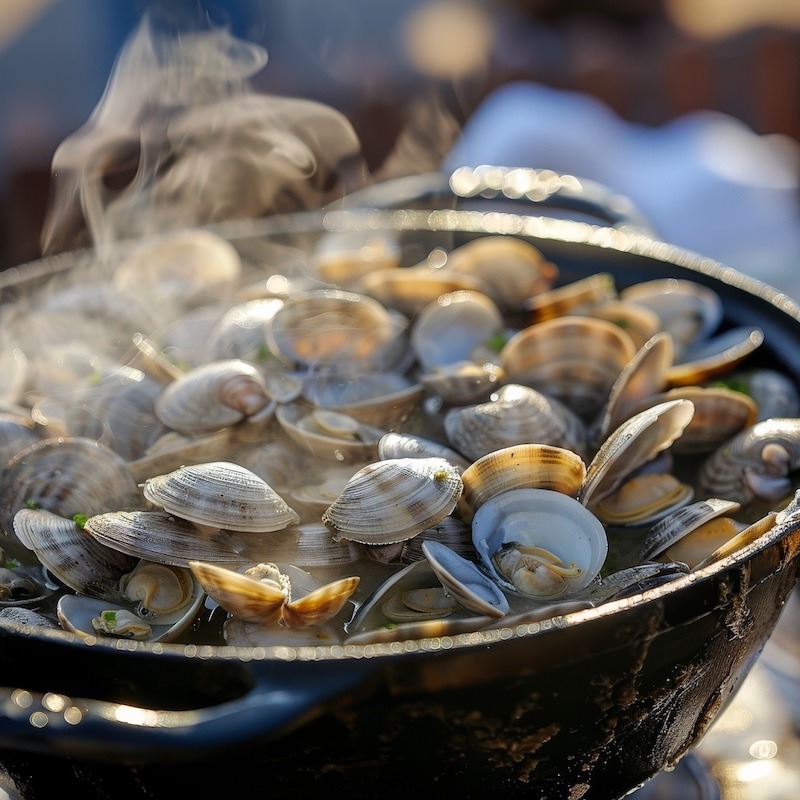
And you will be surprised by what they like and don’t like. For example, my youngest does not like hamburgers. I’m thinking, “What kid doesn’t like hamburgers?” but she and her sister both love steamed clams. When I was a kid I didn’t even like looking at steamed clams.

Dining Out

Ms. Heller also suggests taking kids out to restaurants so they can learn to eat different ethnic foods. I could not agree more. Not only do they experience new styles of cooking, they get the whole experience of dining out and how to behave in a nice restaurant. Be careful how young you start taking them out to be considerate of the other people in the restaurant.

One of the first times we took our oldest daughter out to a restaurant as a baby, I was holding her in my arms with her head looking over my shoulder at the table behind us. They thought this was cute until she threw up. Luckily we knew the people and they were ok with it but it could have been a really bad experience for everyone.

Cook With Your Kids

The most powerful suggestion Ms. Heller writes is “Cook with your kids. Children love to cook. They love to eat what they’ve made.”

This is so true. I can’t tell you how much my kids like to help in the kitchen especially my 7 ½ year old with cerebral palsy. We have a special stander that brings her up to counter height and she helps me prepare meals. She gets great satisfaction out of being able to help and she is definitely more likely to try eating something that she was involved preparing than something I throw in front of her.

I get emails from parents all the time asking me about cooking classes for their kids. They are around and I am going to put together a list and post it on my web site but I always respond to the parents by suggestion them to start in their own kitchens. At these early stages, most of us parents have all the skills we need to be our kids’ culinary arts instructors. Besides, it’s a great way to bond with your kids.


Tips for Buying Seafood

October 7th, 2007 by RG in Ask A Chef, Cooking Tips, Seafood Recipes

How to Buy Seafood - Advice from a professional chef

Buying Grouper  
Grouper
St. Petersburg Times photo

Recently I received an email from Diane who wanted to know why the grouper she bought in bulk didn’t look like grouper she purchased in the past. In fact, she questioned whether or not it was really grouper at all. Here’s what she said,

“I have been a grouper lover for years and up until recently I have enjoyed it frequently.  I purchased it through a food company that provides meat, poultry and fish in bulk.  In my last two orders I have received a fish that they are calling grouper, but it doesn’t look or taste like grouper.

 I am used to a nice white very light fish.  This fish is off white with brown coloration through it and it is a very thick fish.  It doesn’t flake like grouper; it forks off in larger pieces.  The company is insisting that it is grouper, just a different kind. 

They said that there was a problem with the grouper from Florida so they are getting it somewhere else.  I told them that all grouper is a translucent white thin fillet until cooked.  Is it possible that I am getting grouper?  I have no idea where to turn with this issue….” -  Diane

Black Grouper

Buying Seafood

So here was a situation where Diane was buying fish site unseen, very similar to when a chef buys fish from his supplier without seeing it. He has to trust his fish purveyor will bring him what he wants and the fish people know he will return it if it does not meet his specifications. We have the advantage of going to the market, seeing the fish and if feeling bold, asking the fishmonger to let us smell it for freshness.

Most of us wouldn’t dream of smelling fish before purchasing but it is a good practice to get into. Nothing is more frustrating than buying some fesh fish at the market only to bring it home, give it a smell and realize it is not as fresh as you thought it was. By asking the fish person to smell it, they realize you know what you are doing and will give you a little more consideration next time you come in to buy fish.

What Does A Professional Think?

(more…)


« Previous ArticleNext Article »