



Chicken Stock Recipe
A great recipe for making homemade chicken stock, an essential ingredient to so many recipes.
Equipment
- Stockpot
Ingredients
- 5 pounds chicken pieces wings, backs and necks. (If you purchase whole chickens to cut up for a recipe, you can always remove these parts and freeze them until you have enough to make stock.)
- 4 quarts cold water
- 2 onions
- 3 carrots
- 3 celery stalks
For the Sachet
- 2 bay leaves
- 6 sprigs of fresh parsley
- 12 whole peppercorns
- 1 teaspoon fresh thyme or 1/2 teaspoon dried
Instructions
Preheat & Prep
- Preheat the oven to 350°F.
- If starting with whole chickens, break them down into parts. Remove the breasts for another use if you prefer a richer stock without white meat. If using the breasts, set them aside and add them later in the simmer so they don’t overcook.Tip: Wings, backs, and necks are ideal for stock because they’re rich in collagen.
Make the Sachet
- Place the bay leaves, parsley, peppercorns, and thyme into a square of cheesecloth. Tie securely with kitchen string and set aside.Tip: A sachet keeps the stock clean and makes removal effortless later.
Prepare the Vegetables
- Peel or scrub the onions and carrots. Roughly chop the onions and quarter the carrots and celery.Tip: No need for small cuts. Large pieces prevent the vegetables from breaking down and muddying the stock.
Roast the Chicken & Vegetables
- Arrange the chicken pieces and vegetables in a sturdy roasting pan. Lightly oil the pan if needed to prevent sticking.
- Roast until the chicken is well-browned and the vegetables have caramelized edges, about 45–60 minutes.Tip: Browning equals flavor. Don’t rush this step.
Transfer to the Stockpot
- Move the roasted chicken and vegetables to a large stockpot.
- If excess fat has collected in the roasting pan, spoon off some of it off, but leave behind the browned bits and juices.
Deglaze the Roasting Pan
- Place the hot roasting pan over a burner (use oven mitts). Add 1 quart of the cold water and bring it to a gentle simmer.
- Scrape the bottom with a wooden spoon to release all the caramelized bits.
- Pour this flavorful liquid into the stockpot.Tip: This step captures concentrated flavor that would otherwise be lost.
Add the Remaining Water & Bring to Temperature
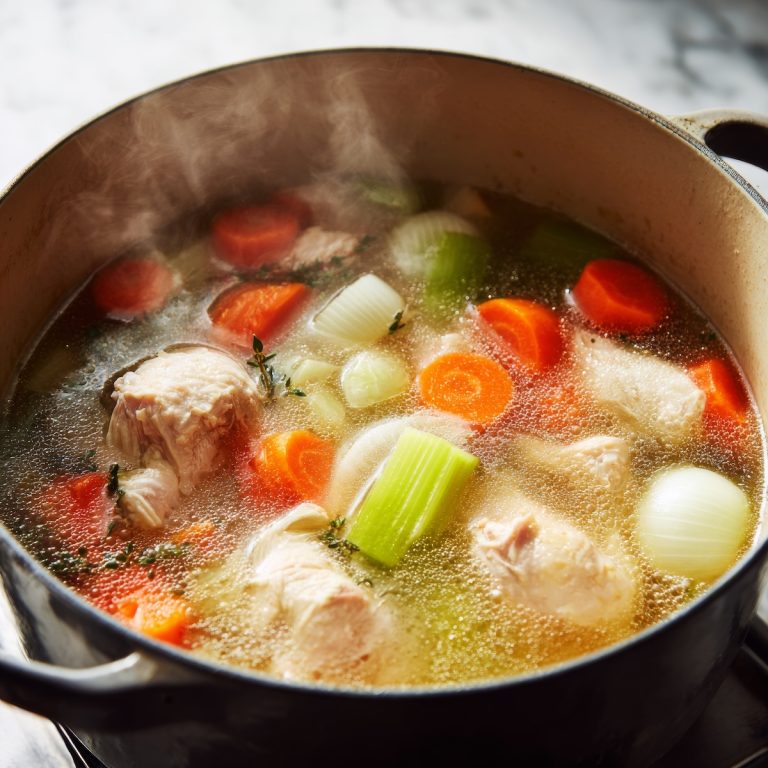
- Add the remaining 3 quarts of cold water to the stockpot. Bring to a boil over high heat, watching closely.
- As soon as it boils, immediately reduce the heat to a gentle simmer.Tip: Boiling emulsifies fat and clouds the stock. A lazy simmer keeps it clean.
Skim & Add the Sachet
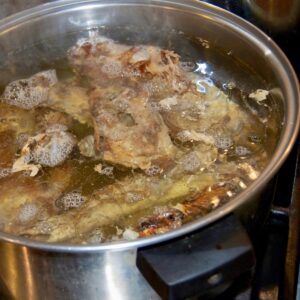
- As foam and impurities rise to the surface, skim them off with a spoon.
- Add the sachet to the pot once the surface is mostly clear.
Simmer Patiently
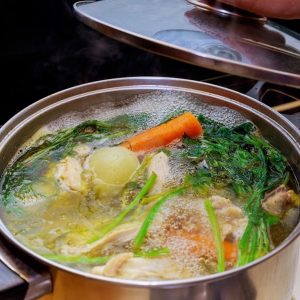
- Simmer uncovered for 3 to 4 hours, skimming occasionally as needed.Tip: More time doesn’t mean better stock. Past 4 hours, bitterness can creep in.
Strain & Cool
- Remove the sachet. Strain the stock through a fine-mesh strainer into a clean container.
- Let cool slightly before refrigerating.
Store
- Refrigerate the stock for up to 1 week. Once chilled, scrape off any solidified fat from the surface if desired.
- Freeze for up to 3 months in airtight containers.Tip: Freeze in measured portions so you only thaw what you need.
Notes
You now have a rich, flavorful, important ingredient that you can use to make all sorts of soups and stews. It can also be used for sautéing or deglazing pan sauces. And you won't believe how much better it is than the salty canned stuff you buy in a store.
What is a Sachet?
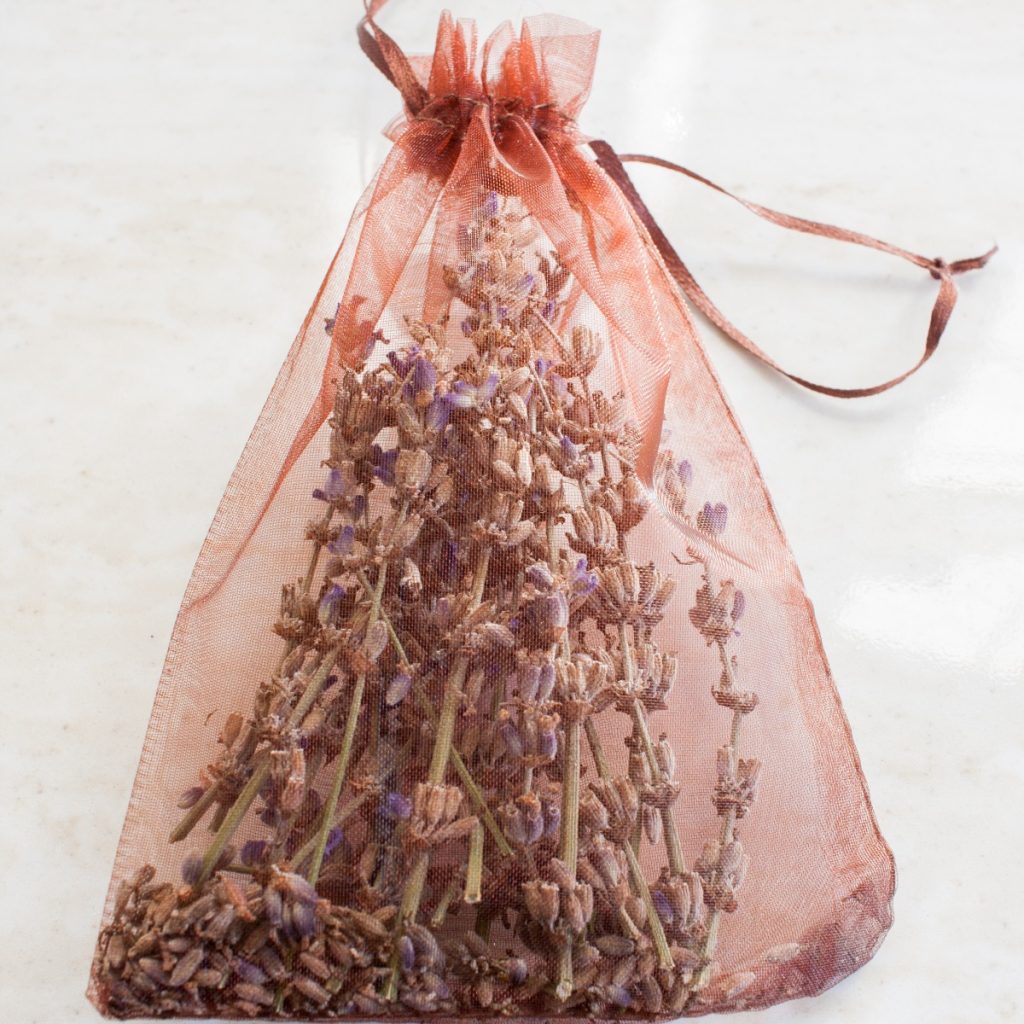
A sachet is a small bag made of cloth or cheesecloth filled with various herbs and spices, used to add flavor to soups, stews, stocks, and sauces. The combination of herbs and spices can vary depending on the type of cooking, but typically includes bay leaves, peppercorns, parsley, and thyme.
Fresh herbs and spices are preferable, but dried ones will suffice if you need to use them instead. You can use kitchen string (I have a roll of kite string in our kitchen) to tie the bundle together or even tie the four corners to themselves.
I have even seen these nifty disposable cloth bags you can buy at kitchen supply stores.