FAQ: What to Consider When Buying a Stock Pot
What size stock pot should I buy?
For everyday cooking, a 6- to 8-quart stock pot works well. If you cook for a crowd or make big batches of soup, chili, or broth, a 12-quart or larger pot is better.
How much should I spend on a stock pot?
Budget stock pots can cost under $50, but mid-range stainless steel pots around $75–$150 usually offer better durability and performance. High-end enameled cast iron or multi-clad pots may run $200+.
What material is best for a stock pot?
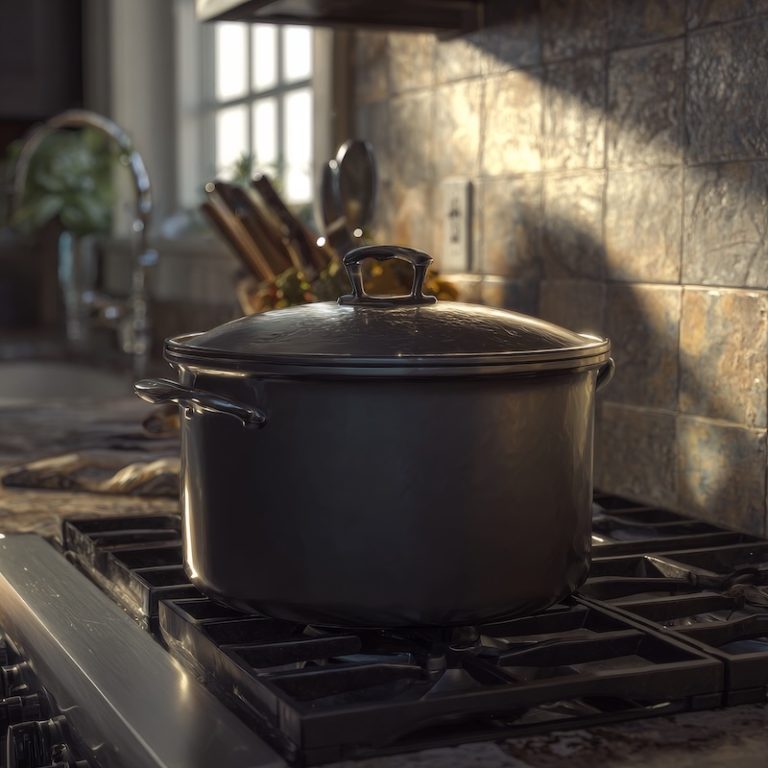
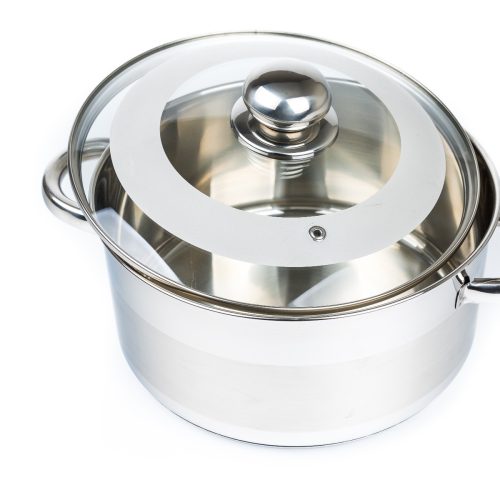
Stainless steel is durable and non-reactive. Aluminum heats quickly but can dent. Enameled cast iron retains heat beautifully and looks attractive for serving. Multi-clad steel combines performance with even heating.
Are stock pots too heavy when full?
Large pots filled with liquid can be heavy. Look for sturdy handles and balanced weight so lifting is safer.
Can I use a stock pot for more than soups?
Yes. Stock pots are versatile. You can use them for pasta, stews, seafood boils, sauces, or even small-batch canning.
Do stock pots need special care?
Most stainless steel and aluminum pots are dishwasher safe. Enameled cast iron needs hand washing but is easy to clean. Always check manufacturer instructions.
What brands make the best stock pots?
Trusted names include All-Clad, Cuisinart, Le Creuset, Lodge, and Tramontina. Choose based on your budget and cooking style.



7 Responses
First of all, thank you so much for the information you gave on choosing a good stock pot. We’re trying to buy a 20qt for our son and daughter in law as a house warming gift for their first house. My son is a little like me and is cooking lots of chicken pot pie (chicken and dumplings as some would call it) but for us easterners it’s pot pie.lol and he’ll also be cooking my Mom’s spaghetti sauce too. which needs a very large pot. He cook’s for quite a few people in his church and is trying to do his cooking in an 8qt pot. Not a good move when making large batches as you know. I haven’t bought a new stock pot in years and was looking for up to date information before I bought again.
Your information was on the money as far as being informative. So thank you. You’ve backed up the knowlege I pretty much had but you refreshed my memory.
Now as far as the comment that Jim Urick made. If you don’t mind, common Jim not everyone that writes a blog is a professional.. nor has the means of receiving help with writing his/her blogs. I think we’re blessed that he put’s the information out here for all of us to see. And he takes the time away from his family to write about his recipes and gives quite useful information on all sorts of things if we just ask him. If something isn’t quite used in a proper context or spelled right.. well I think we got the jist of what he is saying. Right? Hey I’m sure i spelled quite a few things wrong here.. but hey.. i’m blind.. and I don’t think anyone really give a hoot about that either.. i’m just blessed that i came looking for information and found it! and this wonderful man was here to give solid information that i could understand without saying huh? and having to go on a wild goosehunt looking for meanings and so on. Right? Just saying. Thanks gentlemen for your time. And bless you both!
Thank you very much for your comments Debbie.
I have read several articles about choosing the “correct” pot. But I haven’t seen anyone address the size of the pot in relation to the burners. I have an 8 qt pot, and it covers the burner completely. If I bought a 20 qt pot, it would extend way beyond the burner, and I think would heat unevenly. Do you have any input to this issue?
Great question Michael and one I will look into in more detail. I too have some pans that are much bigger than others so I am very careful to place them right in the center of the heat so they don’t burn unevenly but I never thought about the relation of the size of the pan to the burner. I’m guessing you have to consider the amount of time it takes to get a larger pan hot before you start cooking and then keeping it hot. Then you would have to take into consideration the stove top’s BTUs. On most stoves I’ve seen, there are larger and smaller burners. Even the electric stove I grew up with had 2 or 3 different size burners but I can’t imagine ever putting a giant commercial pot on any of those burners. Then again, I remember my dad cooking live lobsters in a giant pot on our childhood 4 burner electric stove. It must of taken forever to get that water hot. I’ll do some research and see what I can find out but if anyone has some input, please let us know.
I personally believe that most of the household cooking is done by using 12 qt stock pots or smaller. Therefore, there will not be any pot-to-burner relationship problem. For small pots I would use low flame, for slightly larger ones I would use medium flame. However, it is with the 12 qt pot that I face a problem: if I want to cook evenly, I must use the high flame to cover the entire bottom of the pot, but that runs contrary to all manufacturers’ warnings telling me not to use high but medium to low flame on the pots. Here there’s not much I can do but to use medium flame, the relationship notwithstanding.
I loved all the pot information. I have had the same stock pot since I was a kid in the 70s and it was 20 qtr pot. Every homemade sauce in my life till 3 yrs ago was cooked in that thing. Well long story short I was robbed during a move and they got my pan. I’m beyond heartbroken and everything I find I can afford just won’t do. We end up with a total of 18 qtrs of sauce when it’s done cooking 24 plus hours. We have cooked on gas and electric burns. When I had the pan took from me. I started cooking my sauce in a old roaster on top of two burners electric and gas and it worked great. However I have the old alum roasters and it cooks it just as great just can’t make my whole batch like before. And I so need a large sauce pan. Thanks for all the great info. But I want you to know the 20 plus pans cook just as good you do cook them a lot longer and believe it or not that is how it goes from sauce to gravy and than you know what the old folks was talking about. The sauce will go from red to a brownish and than that is the old italy way of cooking your gravy.
Marcie, sorry to hear about your stock pot being stolen. Thank you for all your information about making sauce (gravy). Much appreciated.