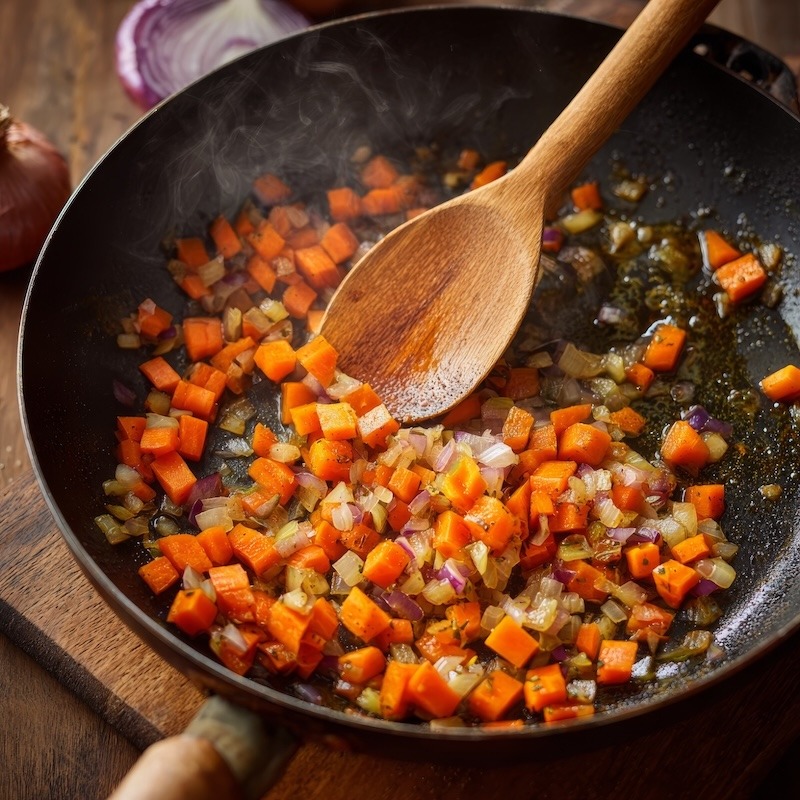
Sweating food is a simple but powerful cooking technique that brings out deep flavor without browning. You’ll often see it at the start of a recipe when onions, garlic, or celery hit the pan. It’s not about high heat or crisp edges. It’s about coaxing out moisture and softening texture gently.
To sweat, you cook over low to medium heat with a bit of fat—like oil or butter. You stir often. The goal is to let the veggies release their water slowly. This helps break them down and build a rich, aromatic base for soups, sauces, and stews.
You’ll know it’s working when your kitchen starts to smell amazing and your onions look glossy and soft—not browned. It’s easy to rush this step, but patience pays off. You’re laying the flavor foundation for whatever comes next.
Whether you’re making risotto, a creamy soup, or a slow braise, sweating your aromatics is a smart move. It’s a quiet start that leads to bold results. Once you get the hang of it, you’ll start noticing how many recipes depend on this low-key, high-reward technique.
Let’s break down how to sweat foods properly—and how to use it to boost your everyday cooking.

17 Responses
Sweating is another cooking fallacy. If you are cooking something for a long period of time such as stew or soup. There is no need to sweat vegetables. Throw them in the pot.
How about spaghetti then? Sweat the onions, garlic and peppers with a bit of oil and some salt and pepper, and let the mushrooms soften up in some butter, allowing the flavors to blend and sweeten up, or just dump them in the pot with the sauce? I tried both and it’s way better to take the five minutes and sweat down the veg first. Otherwise you miss the melllow sweetness that adds depth and dimension to the sauce.
well said poutine. i always sweat when adding vegetables to pasta sauce. not doing so makes for a weaker sauce. and chopped garlic should always sweat in oil prior to meat, sauce, etc to flavor the oil prior to cooking the main course.
I thought maybe your comment, ‘Know It All’ was a fallacy. You can throw it all in the pot ie: brkfst lunch and supper if you like but the object here is to discuss the art and craft of cooking as in to sweat or not to sweat – and I prefer to.
Thanks for the scientific explanation Stephen
What about if I want them in an omelet?
Not if you want to soften and flavor them up for a puree’.
Thank you for this explanation. I always sweat my vegetables before putting them in my soups, chili and stews. I didn’t know why, I just did it. Now I know why I do it.
Another good way to sweat the veggies, especially garlic, score the veggies, if garlic with/without the skin, place in a small pan, oven safe of course, place the heat to a low setting, temp depends on what you still may have to prep still. And wait until the desired softness use juice and all, perfect for a quick marinade or even long processes.
Hi G.
You don’t mention two things that I find really useful. Unsalted butter rather than oil because of residues and using a lid to keep things like onions clear. You can also use a little white wine as a moisturiser.
Hi Tim, thank you for your comments. I have always sweated my vegetables with the lid off but your comment makes a lot of sense so I’m going to do some research and adjust my technique if necessary. I also like your suggestion of using unsalted butter, but I think for most home cooks, the residues would not be a factor.
I agree with @Poutine: Sweated veggies are nicer. I think sweating vegetables is sort of a half-way step between poaching (using a fair amount of water) and sauteing them. Poaching only softens and extracts; sweating softens and extracts AND does a mild chemical change (as in Maillard reaction and caramelization). Anyone like to (dis)agree?
Nope, I agree about the flavor of sweated vegetables. There are just some occasions where a dish calls for poaching for different results.
I’m preparing leeks to make Potato-Leek soup. A tip in my recipe book states that the leeks need “a good sweat.” I have never heard of sweating vegetables but as with Kathryn Brown I’ve always done it and didn’t know why. I didn’t know it had an official name! I always thought I was sautéing. Thx for the explanation!
I was taught that in the ‘classic’ sense a sweat was when a piece of waxed paper was cut to size to fit snugly around the bottom of the pan, was coated w/a thin coat of butter then placed down on the vegetables to start the release of moisture. The pan was covered to control the moisture lose as browning was the last thing one wanted here. I assumed this procedure was to cook the vegetables without any browning as the end use would be a lighter sauce or soup.
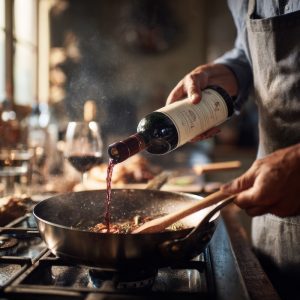
& De-glaze the pan with reisling!!
Hello. Thank you for always good blog.
You are welcome Ryann.