


Simple Reduction Sauce
This simple reduction sauce recipe teaches you how to transform wine, stock, or vinegar into a rich, silky, and flavorful sauce that elevates meats, vegetables, or poultry with just a few ingredients and easy steps.
Servings: 4 servings
Equipment
- Sauce pan
Ingredients
- fond from searing beef or lamb
- 2 teaspoons cooking oil or bacon fat if no fat is left in the pan
- 1 small shallot minced
- 1 cup red wine full bodied
- 1 cup beef or veal stock
- salt and pepper to taste
- 1 tablespoon butter cut into small pieces
- 1 tablespoon fresh herbs minced, thyme and rosemary work well here
Instructions
Rest the Meat
- Remove your cooked meat from the pan and cover it loosely with foil to keep warm.Tip: Resting allows juices to redistribute, keeping your meat tender and juicy.
Saute the Aromatics
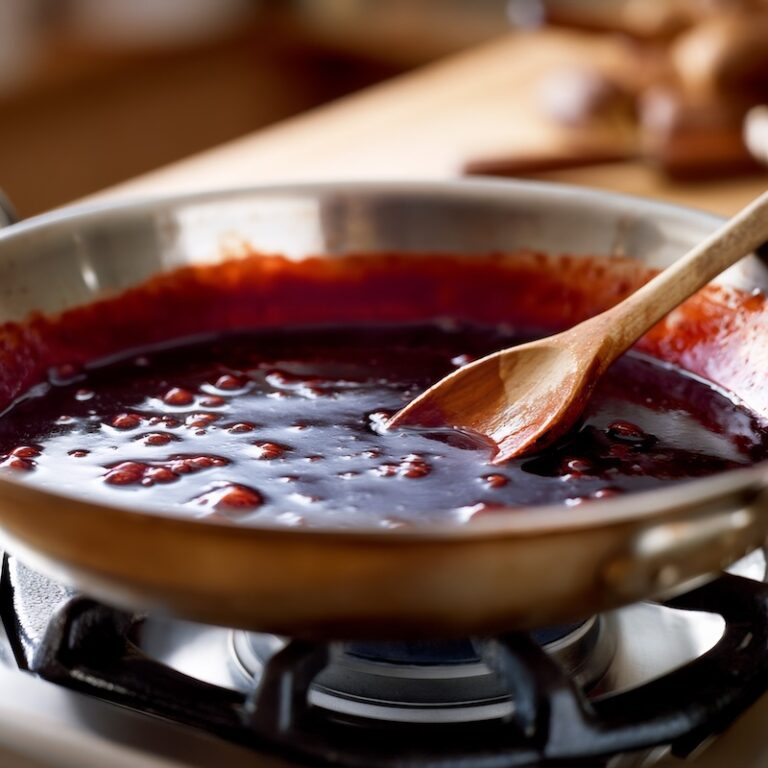
- Add oil or bacon fat to the hot pan if needed, then add the shallot and wine.Tip: Use a wooden spoon to scrape the bottom of the pan and release all the fond—this is where the flavor lives.
Reduce the Wine
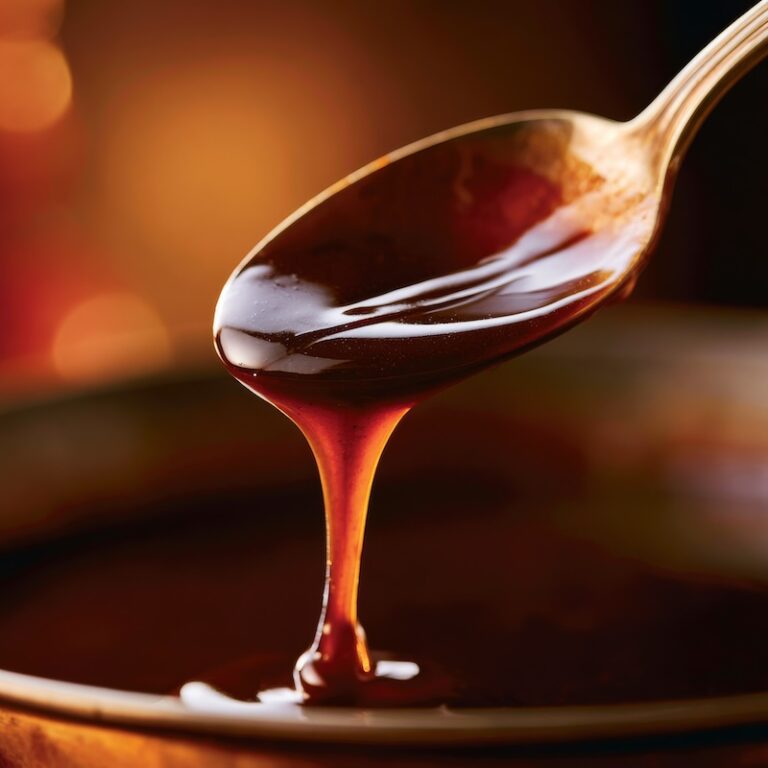
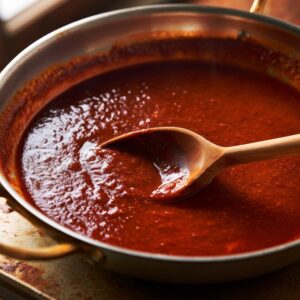
- Cook until the shallot softens and the wine reduces to a thick, syrupy consistency, leaving about ¼ cup in the pan.Tip: Be patient—slow reduction intensifies flavor without burning.
Add Stock
- Pour in the stock and simmer until the liquid reduces by at least half.Tip: Keep an eye on the sauce—slow simmering gives a richer, more concentrated flavor.
Season Carefully
- Remove the pan from the heat and taste the sauce.
- Add salt and/or pepper as needed.Tip: Wait until after reduction to season—reducing concentrates salt and can make it too salty if added too early.
Finish with Butter
- Swirl in cold butter a little at a time.Tip: This optional step adds silkiness, rounds out flavors, and gives your sauce a glossy sheen.
Add Fresh Herbs
- Stir in herbs just before serving for a burst of fresh flavor.Tip: Adding herbs at the end preserves their color and aroma.
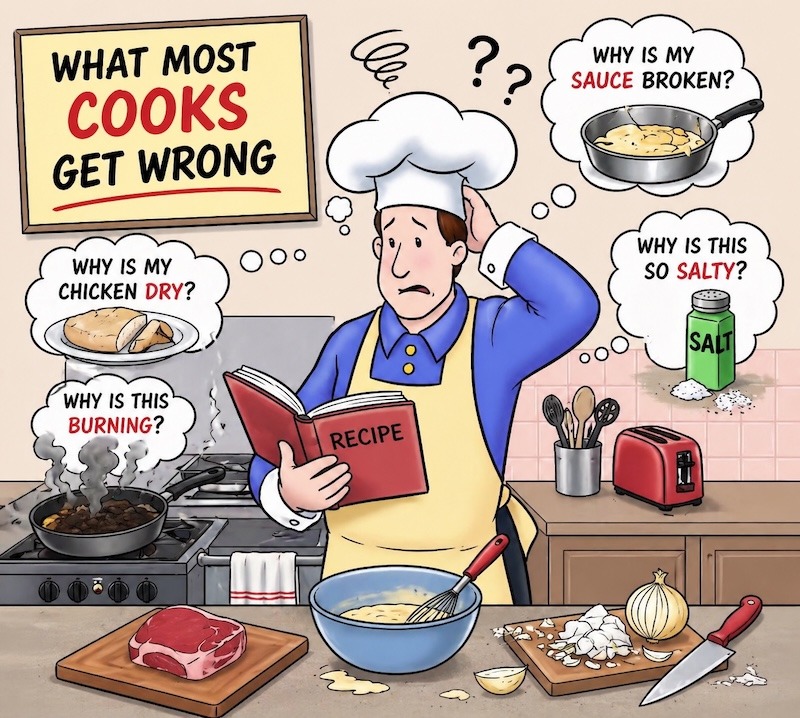
What Most Cooks Get Wrong
- They reduce on high heat because nothing seems to be happening. A good simmer looks deceptively calm. The temptation is to crank the heat — which scorches the sugars and turns the sauce bitter before it gets a chance to develop.
- They season before reducing. A stock that's lightly salted going in can be aggressively salty after reducing by half. Salt at the end, not the beginning.
- They use low-sodium broth and then wonder why the sauce has no depth. Reduction concentrates everything — including the flat, slightly chemical taste of inferior stock. Start with quality liquid.
- They over-reduce and end up with something sticky and too intense. If this happens, add a small splash of stock or water, bring back to a simmer briefly, and re-taste. It's recoverable.
- They add butter to a hot pan. Butter should go in off the heat or on the lowest possible setting. A hot pan breaks the emulsion and you end up with a greasy, separated sauce instead of something glossy.
- They skip the fond. If you've been pouring off the drippings before you start the sauce, stop. That's where most of the flavor lives.



9 Responses
I too always had problems (time wise) with reductions. Always takes longer than specified in a recipe. Your post reads, to let the liquid (simmer?) for several hours till reduced. Yet the recipe says the cook time is only 15 minutes. I’m confused.
Cathleen, I was trying to describe, and not to well as I can see, the difference between a simple reduction which can take hours and a reduction sauce that typically takes 15 minutes or less. Sorry for the confusion and thanks for bringing this to my attention.
I’ve recently started cooking and your website and posts have been very much invaluable.
I’ve been messing around with simple pan sauces (as demi glaces sauces are a bit daunting), and realized that chicken stock and broth aren’t the same things, and perhaps that’s why my sauces are going from thin to gritty-pasty, skipping right over smooth and syrupy.
I was wondering if the veal stock recipe you use needs to be adapted (rather than just scaled down) for use in a crock pot. I can’t seem to find anything better than “better than bouillon” in my budget as far as store bought products go, and i feel relatively safe leaving a crockpot unattended for 12 hours to make my own chicken stock for pan sauces and beef stock for reducing into a glace.
Sidd, I have never even tried making a stock in a crock pot. Is it even possible? I don’t think there is enough heat to make a proper stock or reduce a stock down to a glace but if you do give it a try, please let me know your results. I have read Better Than Bouillon is a good cost effective stock but why not just make your own in about an hour with the leftover carcass of a roasted chicken. We made a whole bunch of turkey stock using the carcass and leg bones that we’ll use for soup, risotto, sauces. If you are interested in learning more about the difference between chicken stock and broth, please read my post http://www.reluctantgourmet.com/is-chicken-stock-the-same-as-chicken-broth/
I would like to know the differences between a pressure cooker, a slow cooker and a crock pot.
thanks,
Charles
Charles, I think of a slow cooker and crock pot being one in the same. Crock Pot is a commercial brand of a slow cooker. Basically, a slow cooker is “a large electric pot used for cooking food, especially stews, very slowly.” Check out my post on crock pot or Dutch Oven. A pressure cooker is a horse of a different color.
A pressure cooker is “an airtight pot in which food can be cooked quickly under steam pressure” and you can read more about them on my Pressure Cooker post.
Hope this helps.
Hi Stephen:
Not sure if you are still monitoring this post but thank you for posting this. I have been looking on line for the procedure for making a reduction and most of not all of the posts are ways to short-cut the process, which is definitely NOT what I wanted. In regard to this particular procedure, at what point would you add mushrooms? would they be fresh of dried? and what type would you recommend? Thank you!
Hi Richard, thanks for reaching out. I add mushrooms right after I deglaze with wine and scrape the fond from the bottom of the pan. Mushrooms contain a lot of water and it will release when cooking. As I reduce the wine, the mushrooms will release their liquid and then I reduce both. That’s how I typically do it but that doesn’t mean it is the only way. You can experiment with adding mushrooms when you add the stock and see which way you like it best.
Great post. Really helpful information. Thanks.