

Pasta e Fagioli
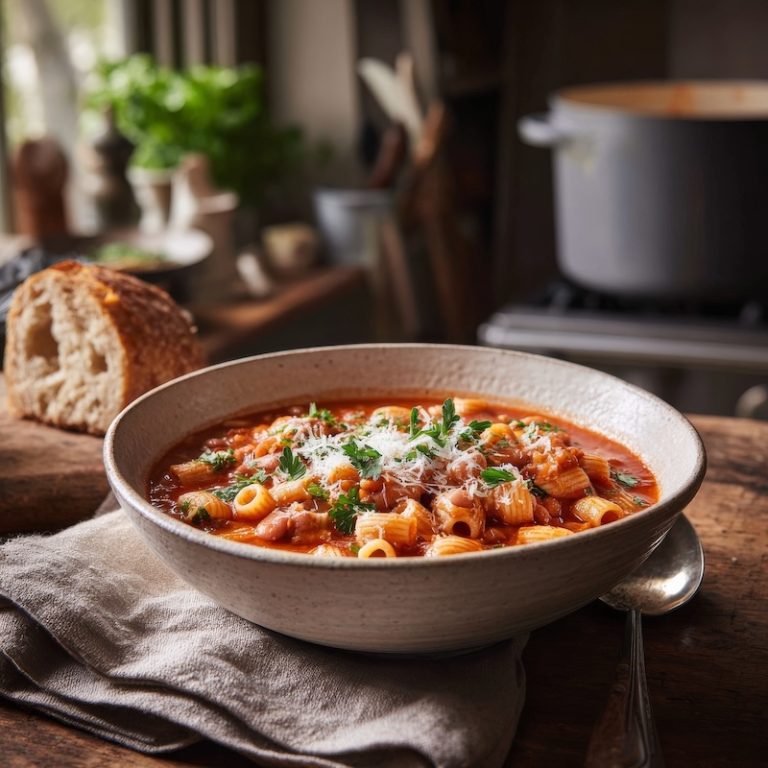
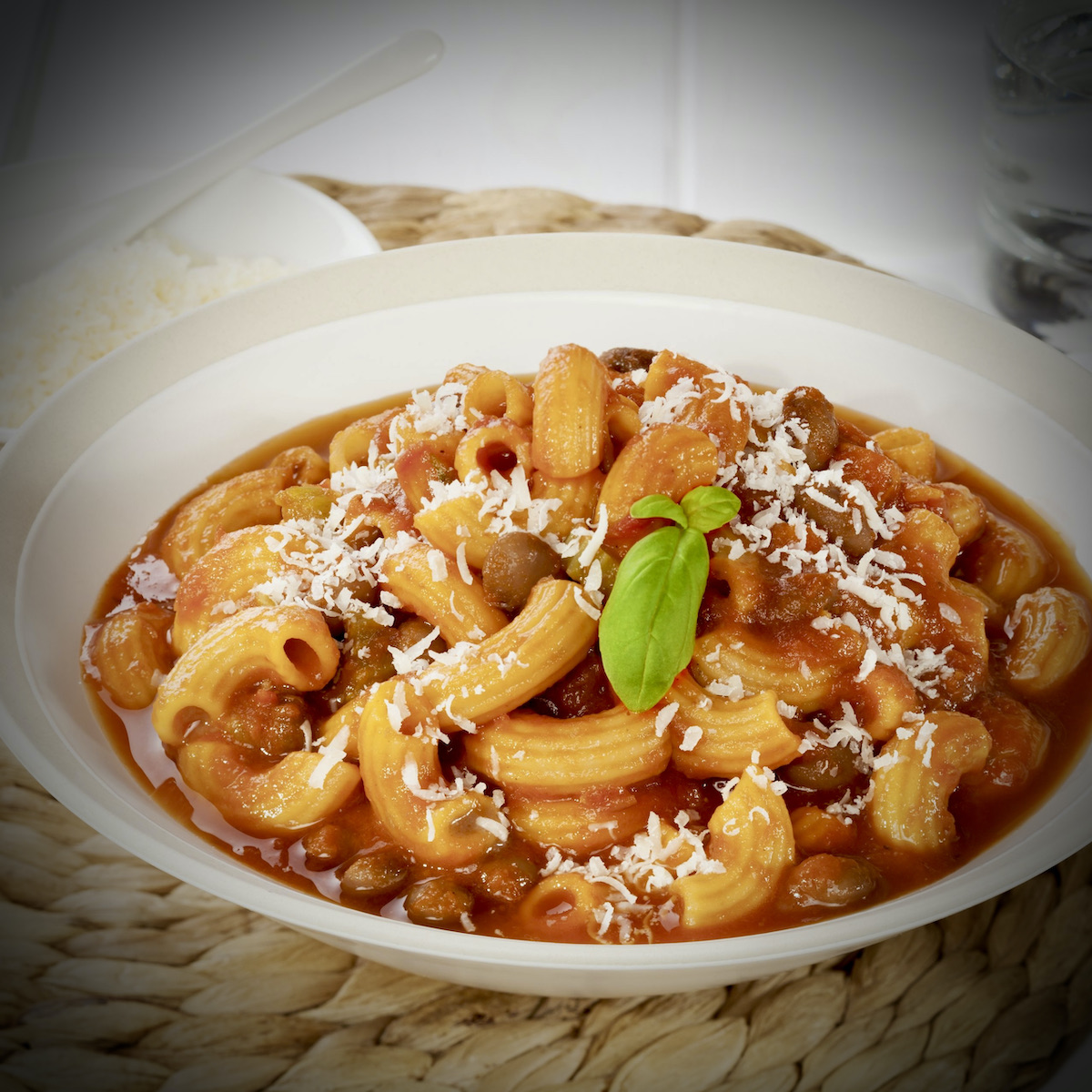
A classic recipe for pasta e fagioli.
Servings: 8 people
Ingredients
- 1½ cups dried cranberry, cannellini or borlotti beans or 3 (15 oz) cans, drained and rinsed
- 3 tablespoons extra virgin olive oil
- 4 ounces pancetta or guanciale diced, optional for authenticity
- 1 large onion finely chopped
- 1 medium carrot finely diced
- 2 stalks celery finely diced
- 3 cloves garlic minced
- 1 sprig fresh rosemary or 1 teaspoon dried thyme
- 2 tablespoons tomato paste
- 14 ounces crushed tomatoes
- 6 cups chicken stock or vegetable stock
- 1 cup small pasta (ditalini, tubettini or small shells
- salt & pepper to taste
- ½ cup Parmigiano - Reggiano cheese finely grated
- 2 tablespoons fresh parsley chopped
- red pepper flakes optional
Instructions
Prep beans
- If using dried beans, soak overnight (8–12 hr) or quick-soak: cover with water, bring to a boil 2 minutes, remove from heat and sit 1 hour. Drain. (Soak: 8–12 hr / Quick: 1 hr.)
Cook beans
- Put soaked beans in a pot. Cover with 2 inches of water. Bring to a simmer and cook 50–75 minutes until tender. Reserve 1 cup of the cooking liquid. Drain the rest. (Bean cook: 50–75 min.)If using canned beans, skip steps 1–2 and add them in step 6; total time shortens to ~40 min.
Sauté aromatics
- (10–12 min). Heat olive oil in a large heavy pot over medium heat. Add pancetta and cook 4–5 minutes until browned. Add onion, carrot, and celery. Cook 6–7 minutes until soft. Stir in garlic and rosemary; cook 1 minute.
Build the base
- (3–4 min). Stir in tomato paste and cook 1–2 minutes to deepen flavor. Add crushed tomatoes and 5 cups of stock (reserve 1 cup). Bring to a gentle simmer.
Simmer flavors
- (12–15 min). Let the tomato mixture simmer 12–15 minutes so flavors meld. Taste and season lightly with salt and pepper.
Add beans
- (5–10 min). Add cooked or canned beans and ½–1 cup reserved bean liquid (or extra stock) to achieve a soup/stew balance you like. Simmer 8–10 minutes so beans soak up flavor.
Cook pasta in the pot
- (8–10 min). Add the pasta to the simmering soup. Stir and cook until al dente, 8–10 minutes (follow package for exact time). If the soup thickens too much, add hot water or stock ½ cup at a time.Tip: For easier leftovers, cook pasta separately and add to bowls just before serving.
Finish
- (2 min). Remove rosemary. Stir in parsley and most of the Parmigiano. Adjust salt and pepper.
Serve
- Ladle into bowls. Top with more Parmigiano, a drizzle of olive oil, and a pinch of red pepper flakes if you prefer a bit of heat.
Notes
If you are using canned beans, the total time will be around 40 minutes.

15 Responses
My wife was born in Italy, and after we were married, we spent a lot of time at her parents’ for dinners and feast days, and I quickly adapted to the Italian cuisine. I can almost taste the pasta e fagioli just reading the recipe. Thanks muchly. ciao
Hi Robert, it must have been incredible to enjoy festive meals with your wife and family in Italy. I’m hoping that Eleonora and I can come up with some more tempting recipes for you to try.
Loved reading your article on the ruluctant gourmet. Your family in Pebble Beach, California forwarded your site on to their friends including me. Loved reading your story and going to market. We need this warmth in our computer world. Jacquline
I just commented on your site about the Borlotti bean. This is one of my favorite soups.
You make us want to do better in the kitchen and at the market Lola.
This is one of my favorite dishes and growing up in Rome was truly a gift. We used to go to a place we called the Nunery, not sure if it’s there anymore. It’s out towards Lago Bracciano. They made my favorite pasta e fagioli.
Thanks for sharing this. Un abbraccio forte!
Philip
Mmmm…buono, Lola! Ok, if the weather turning means it will soon be time for pasta e fagioli (my mouth is watering), then sign me up!
-GB, ed.
All I can say is “Yummm!” I will have to try this although I am not sure I can find Barlotti beans! This was a dish my mother enjoyed – although picky kids that we were, we didn’t know how good it was! Now my mouth is watering! Thanks for sharing.
baci, baci,
Rosemary
Hi Rosemary, thanks for sharing your thoughts about this dish. Barlotti beans may be tough to find so you may want to substitute cannelloni beans.
Hi TJ, I’m thrilled you found this Pasta e Fagioli recipe from my friend Lola. Can’t get any more authentic. I may go make some right now for the World Series.
Recently we made a trip to Rome for a vacation along with other stops. We fell in love with the fagioli soup and have been trying to find a recipe like it. searching I have found so many that added all kinds of things that were not in it and finally I found yours and it is GREAT. I am from New York where the real Italian food is and now live in the South where my husband is from. He never knew what the Real Italian Food taste like until we went to Italy. He enjoys it so much more now.
Thank you so much for posting this recipe. I’ve been craving the Pasta Fagioli that I had at a great restaurant in Venice. I ate there many times and can’t remember the name of the restaurant. They were so nice that I’m sure they would have shared the recipe with me. But, until then, this recipe looks like it may be very close to that dish.
I’m looking forward to trying it and to checking out more of your reviews and more from Lola’s site as well!
Hi Nancy, thanks for sharing and please let me know how it turns out. – RG
I made a batch using dried cannellini and uncured bacon. The beans took 6 hours of cooking to soften. The bacon had 110 mg sodium for the 2 slices. I guess that was the problem. Sources say salt will cause the beans to stay hard. The bean bag was packed February 2010 and I was cooking mid December 2010, so i expected them to be fresh enough. Darling husband declared the soup real good and worth waiting to eat at 7 rather than 6.
Hi Gallega, did you soak the beans overnight before using them in the recipe? I have never heard that about salt causing the beans to stay hard….interesting though. Glad the dish was were the wait and thanks for telling us about your experience. – RG
I have spent a long time trying to find my gr. grandmother’s Pasta Fagioli recipe. My mom (now in her 80’s no longer remembers it). I tried your recipe just this week and struck GOLD! I sampled it out to numerous friends, the call backs were for more! This is a keeper.
Pasta Fagioli does not have tomatoes in it! LOL
Thanks Luc, I’ll be sure to pass your comments on to Lola – RG
Not sure if this is Italian “kosher” or not, but my grandfather’s mother and her parents came over from Italy. I don’t know where he got this recipe, but I make it this way (below) and it tastes delicious:
2 cans of dark red kidney beans (I usually use the Goya “in sauce” beans, as those add a nice flavor to the soup.)
2 cups of ditalini pasta
3/4 tbsp garlic powder OR 1 clove garlic
1 tbsp olive oil
1/4 tsp salt
1/2 tsp ground black pepper
parmesan cheese
I did approximate the olive oil, garlic powder, salt, and pepper, because I normally just measure it in my hand or shake it all into a small bowl. Basically, I use a “palmful” of garlic powder, and about half as much of salt and pepper, with maybe a tad more pepper. I also just pour in enough olive oil to leave a 2-3″ circle in the middle of the water, but I think it’s about a tablespoon, maybe a bit more. You can do this all to taste, obviously.
You empty both cans into a pot, put a can of water in, heat to boiling, then put the salt, pepper, and garlic powder in. The broth should have a nice rich flavor, but you be the judge. Then bring back to a boil and put the pasta in. Bring back to a boil and cook the pasta until al dente, stirring frequently so you don’t burn the beans. The soup should be a thick consistency, but not like a paste. (Think the Campbell’s Chunky soups.) Then you’re done, and when you serve it up in bowls, make sure to have heapfuls of parmesan stirred in. That’s a must. You can also add more olive oil. There is no such thing as too much olive oil in Italian cooking.
This is how I make it for relatively low cost, and it still turns out great for those who aren’t as texturally/tastefully-inclined. My girlfriend loves it, and she and I are both food connoisseurs, at least of the “cheaper” variety.
I am a regular reader. How are you, everybody? This post on this web page is actually good.