How to Choose the Best Chef’s Knife for Your Kitchen

Your chef’s knife is the most important tool in your kitchen, shaping everything from prep speed to precision and safety. Choosing the right one isn’t about brand hype—it’s about balance, weight, steel, and fit. This guide breaks down what truly matters so you can invest wisely and cook more confidently every day.

Why a Chef’s Knife Is the Most Important Tool in Any Kitchen

  • One knife replaces many. A quality chef’s knife handles slicing, dicing, chopping, mincing, and even light butchery, reducing clutter and confusion.
  • Speed comes from confidence. When a knife feels balanced and sharp, your movements become faster, safer, and more precise.
  • Better cuts mean better cooking. Uniform ingredients cook evenly, improving texture, flavor, and presentation in every dish.
  • Safety improves with sharpness. A sharp chef’s knife requires less force, making slips and accidents less likely than with dull blades.
  • It’s the foundation of knife skills. Nearly every professional and home cooking technique begins with mastering the chef’s knife.

Who This Chef’s Knife Is For (and Who It Isn’t)

  • For home cooks who want one great knife. If you prefer mastering a single tool instead of juggling a full knife block, this is your workhorse.
  • For cooks focused on everyday meals. Vegetables, proteins, herbs, and prep work make up 90% of kitchen tasks, exactly where a chef’s knife shines.
  • For beginners building real knife skills. Learning proper grip, balance, and cutting technique starts with a chef’s knife.
  • Not for specialty-only tasks. Delicate filleting, heavy bone cutting, or decorative carving still call for purpose-built knives.
  • Not for collectors chasing novelty. This knife earns its place through performance, not gimmicks or niche designs.

Choosing a Chef’s Knife: The Only Kitchen Knife You Really Need

A chef’s knife is more than a piece of cutlery. It is the tool your hands return to again and again, whether you are chopping vegetables for a weeknight dinner or breaking down ingredients for a weekend project.

Yet many home cooks choose one based on price, brand, or looks, only to wonder why it never quite feels right. The truth is that the “best” chef’s knife is deeply personal. Size, weight, balance, blade shape, and steel all affect how a knife performs in your kitchen.

This guide walks you through those choices clearly and practically, so you can select a chef’s knife that fits your cooking style, builds confidence, and earns its place as your most trusted tool.

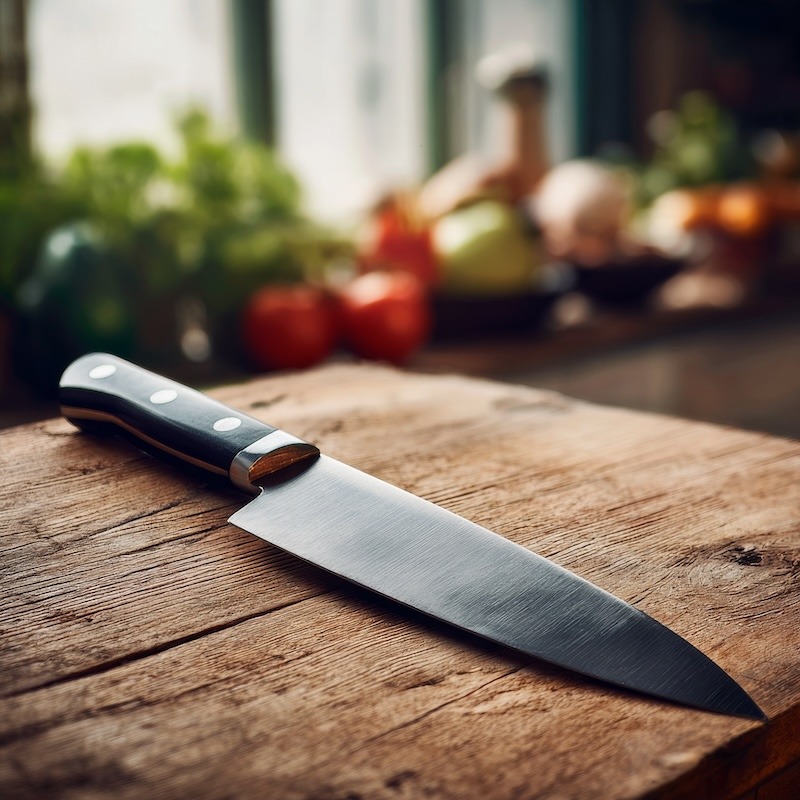
A stainless steel chefs knife, dicing carrots on a wooden cutting board.

What to Consider When Choosing a Chef's Knife

What to Consider Description Why It Matters
Blade Material Most chef’s knives use stainless steel, high-carbon steel, or a blend of both. Affects sharpness, edge retention, rust resistance, and how much maintenance the knife requires.
Tang The tang is the portion of the blade that extends into the handle, either full or partial. A full tang adds strength, durability, and better balance during cutting.
Forged vs. Stamped Forged knives are shaped from a single piece of heated steel; stamped knives are cut from steel sheets. Forged knives often feel heavier and more balanced, while stamped knives are lighter and more flexible.
Balance How the knife’s weight is distributed between the blade and the handle. Good balance reduces hand fatigue and improves control during long prep sessions.
Blade Length Chef’s knives typically range from 6 to 10 inches, with 8 inches being most common. The right length improves comfort, safety, and efficiency based on hand size and cutting style.
Weight The overall heaviness of the knife, influenced by blade thickness and construction. Lighter knives offer agility; heavier knives provide power and momentum for dense foods.
Handle Material Handles may be wood, composite, or synthetic materials with varying textures. A secure, comfortable grip improves control and reduces the risk of slipping.
Handle Shape Western handles are contoured; Japanese handles are often straighter and lighter. Handle shape affects comfort, grip style, and long-term usability.
Edge Angle The angle at which the blade is sharpened, typically wider on Western knives. Determines cutting sharpness, durability, and how often the knife needs sharpening.
Cost Prices range from budget-friendly to professional-grade investments. Paying for quality steel and construction often delivers better performance and longevity.

Chefs' Knife FAQ

What is a chef’s knife used for?

A chef’s knife handles most kitchen tasks, including chopping vegetables, slicing meat, mincing herbs, and crushing garlic. It is designed as an all-purpose knife for everyday cooking.

What size chef’s knife is best for most people?

An 8-inch chef’s knife works well for most home cooks. It offers enough length for efficient slicing while remaining easy to control.

What is the difference between forged and stamped chef’s knives?

Forged knives are made from a single piece of heated steel and often feel heavier and more balanced. Stamped knives are cut from steel sheets and tend to be lighter and more flexible.

Is a full tang chef’s knife better?

A full tang generally provides better balance, strength, and durability, especially for frequent use.

What steel is best for a chef’s knife?

Stainless steel resists rust and is low maintenance. High-carbon steel sharpens easily and holds an edge longer but requires more care. Many knives blend both.

How sharp should a chef’s knife be?

A chef’s knife should slice cleanly with minimal pressure. Sharp knives are safer and more efficient than dull ones.

How often should I sharpen a chef’s knife?

Home cooks typically sharpen every few months, depending on use. Honing regularly helps maintain the edge between sharpenings.

What’s the difference between Western and Japanese chefs’ knives?

Western knives are heavier with thicker spines and wider edge angles. Japanese knives are lighter, thinner, often sharper, and more delicate.

How much should I spend on a chef’s knife?

A reliable chef’s knife can be found in the mid-range price category. Higher cost often reflects better steel, balance, and craftsmanship.

Can a chef’s knife cut through bones?

No. Chef’s knives are not designed for heavy bone cutting. Use a cleaver or butcher knife instead.

How should I store a chef’s knife?

Store it in a knife block, magnetic strip, or blade guard to protect the edge and prevent accidents.

Is one good chef’s knife enough?

Yes. A quality chef’s knife can handle most kitchen tasks, making it the most important knife to own.
6 Responses

  1. 5 stars
    This is great information, thank you for sharing! I’ve really needed a new set of professional chef knives in my kitchen, but didn’t know how to go about choosing them. There have been so many new types of knives since I bought my last set, it’s hard to know which ones to buy.

  2. If you use a knife all day every day then you want a light knife to reduce fatigue. Light knives are a joy to use and so nimble. If you are not a professional though then knife weight really is not an issue, you simply won’t be using them long enough to get fatigued in the first place.

    1. Personally I’ve never really noticed myself getting any more fatigued from a heavy knife, and I like how heavy knives feel a lot more than lighter ones.

  3. 5 stars
    Great article…

    Indeed the right choice of a chef’s knife is elementary for a modern chef of today. It’s not only about sharpness and long standing cutting performance, but also a kind of design and aesthetics…

    The chef knife articulates an attitude of working and cooking.

  4. This is very nice and glorious kitchen knife. Kitchen knife is very essential elements for your households and restaurant. When you would like to make some veggies, herbs, meats and small fruits; although bigger fruits such as watermelons, pineapple require bigger knives for safety purposes. So you can you use kitchen knife for your daily needs.

  5. 5 stars
    Thank you for the great article. No doubt a chef spends his/her time in kitchen and can cook a very delicious food if have a perfect knife to cook something.I found this article very very important because i can select the best knife for me now.

Leave a Reply

Your email address will not be published. Required fields are marked *

This site uses Akismet to reduce spam. Learn how your comment data is processed.