
Classic Caesar Salad: From-Scratch Dressing and Croutons

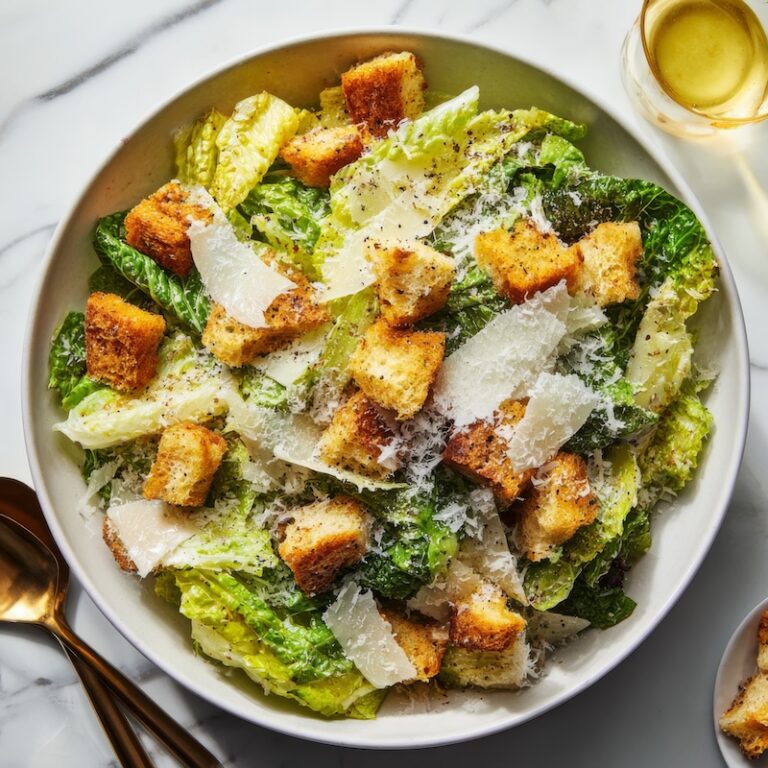
Classic Caesar salad plated in a wide shallow white bowl, whole romaine leaves rather than chopped, shaved Parmesan curls

The Reluctant Gourmet Newsletter Is Back!

Yes, I'm starting up a new newsletter with step-by-step recipes, helpful cooking tips, and my latest funny cooking cartoons. Would love to have you on board.

Caesar salad is one of those dishes everyone thinks they know. You've ordered it a hundred times, and somewhere along the way, "Caesar" came to mean a pale, creamy dressing from a bottle over chopped romaine. The original was made tableside, with whole leaves, a coddled egg, and enough anchovy to matter. Those aren't the same dish.

Fast Answer

A real Caesar dressing is an emulsion built on coddled egg, lemon juice, anchovy, Worcestershire, Dijon, and good olive oil — whisked together and poured over whole romaine leaves with homemade croutons and fresh Parmesan. It takes about 30 minutes and tastes nothing like the bottled version.

How to Make Caesar Salad Dressing That Actually Tastes Right

This recipe came from a chef in New York City, not a cookbook, and it shows. The dressing is built the right way — coddled egg for creaminess, anchovy paste for depth, capers for a sharp edge that most recipes skip entirely.

The croutons are made from a baguette, not a bag. If you’ve only ever had Caesar from a bottle or a chain restaurant, this is a different experience. Here’s how to make it, and why each step matters.

Start Here: How to Approach This Recipe

  • The dressing is the whole game. Everything else — romaine, croutons, Parmesan — is structure. The dressing is what makes this a Caesar and not just a salad.
  • Make the croutons first. They need 10–15 minutes in the oven and can cool while you build the dressing. Cold croutons hold their crunch better than warm ones anyway.
  • Mise en place matters here. You'll be whisking constantly during the oil-add step. Have everything measured and within reach before you start.
  • Serve immediately. Romaine wilts fast once dressed. Have your plates chilled if you want to do this properly — it takes 30 seconds and makes a real difference in how cold and crisp the salad feels.
  • Skill level: The emulsification step requires focus but not experience. If you've made a vinaigrette before, you can do this.

Why This Recipe Works

  • Coddled egg instead of raw. Sixty seconds in boiling water partially sets the egg white while leaving the yolk fluid. This gives the dressing body and a slightly richer texture than a fully raw egg — with less food safety risk.
  • Anchovy paste, not fillets. Paste distributes evenly through the dressing without leaving visible bits, which matters for texture and for people who claim they don't like anchovies. They won't find any — just depth.
  • Capers. Most Caesar recipes skip them. They add a briny, sharp note that lifts the whole dressing and keeps it from tasting flat or one-dimensional. This is the detail that makes people ask what's different.
  • Dijon as emulsifier. Mustard contains compounds that help oil and water-based ingredients bind together. It's not just flavor — it's what keeps the dressing cohesive rather than broken and greasy.
  • Baguette croutons. The open, airy crumb of a baguette creates croutons that are genuinely crunchy throughout, not just on the outside. Sandwich bread turns soft in the middle. Use the baguette.
  • The recipe came from a NYC chef. Not a cookbook, not a test kitchen. Someone who made this in a professional kitchen and knew what they were doing. That provenance matters when the ingredient list looks slightly different from what you've seen before.

Caesar Cardini was an Italian-American chef running a restaurant called Caesar’s Place in Tijuana in 1924 — popular with Americans because Prohibition hadn’t crossed the border. The legend goes that on July 4th, the kitchen was running low on supplies and the restaurant was slammed. Cardini improvised with what he had: romaine, garlic, croutons, Parmesan, olive oil, lemon, Worcestershire, and black pepper.

He made it tableside, tossing whole leaves by hand and serving them as finger food. The spectacle was half the point. Word spread — Hollywood celebrities started making the trip, and the salad traveled with them back across the border.

Worth noting: the original had no anchovy beyond what’s in Worcestershire sauce. The version here adds anchovy paste anyway, because it makes a better dressing. Cardini might disagree. Fred in the comments definitely would.

Raw Eggs, Coddled Eggs, and Food Safety

  • Why eggs are in Caesar dressing at all: The yolk emulsifies the dressing — it binds the oil and acid together into something creamy and cohesive rather than a broken, greasy mess. You can't replicate that with water.
  • The raw egg risk: Salmonella is real but statistically uncommon in fresh, refrigerated eggs from a reputable source. The risk is low for healthy adults. It's not zero.
  • What coddling does: Sixty seconds in boiling water partially sets the white while leaving the yolk fluid. It reduces surface bacteria without cooking the egg through — you keep the emulsifying function while lowering the risk meaningfully.
  • If you want to skip the risk entirely: Use 1 tablespoon of good mayonnaise instead. Mayo is already an emulsified egg product — it does the same structural job. The dressing will be slightly richer and less bright, but most people won't notice.
  • Who should avoid raw or coddled eggs: Pregnant women, young children, elderly individuals, and anyone immunocompromised. For those groups, pasteurized eggs or the mayo substitution are the right call — no negotiation needed.
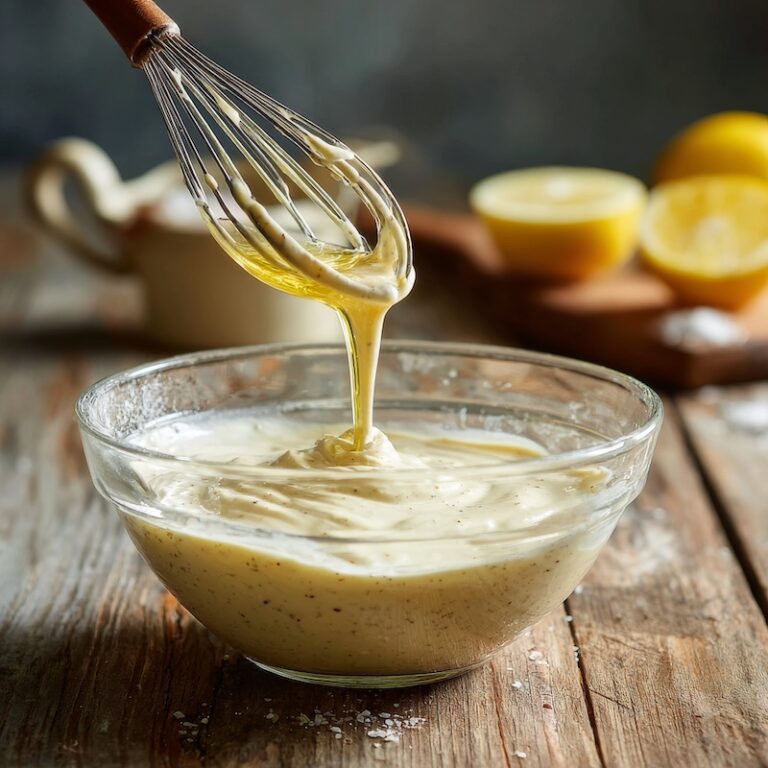
Small glass bowl of Caesar dressing mid-whisk
Classic Caesar salad plated in a wide shallow white bowl, whole romaine leaves rather than chopped, shaved Parmesan curls
Print Recipe
4.89 from 9 votes

Caesar Salad Recipe

A NYC chef's Caesar built on coddled egg, anchovy paste, capers, and Dijon — whisked into a proper emulsion and served over romaine with garlic baguette croutons and freshly grated Parmesan.
Prep Time30 minutes
Cook Time15 minutes
Total Time45 minutes
Course: Salad
Cuisine: American, Mexican
Keyword: caesar salad
Servings: 4 servings
Calories: 681kcal

Ingredients

For the Croutons

  • 2 cloves garlic large
  • 1 pinch salt
  • 3 tablespoons olive oil virgin
  • 2 cups French baguette slices cut up into ½ inch cubes, white bread works too

For the Salad

Instructions

For the Croutons

  • Infuse the oil with garlic.
    Crush 2 large garlic cloves and combine them in a bowl with 3 tablespoons of olive oil and a pinch of salt.
    Let this sit for 5–10 minutes if you have time — the oil picks up garlic flavor fast, and you want it distributed through every crouton, not just sitting on the surface.
  • Cut and coat the bread.
    Cut your baguette into ½-inch cubes — about 2 cups worth. Add them to the garlic oil and toss until every cube is coated evenly.
    Don't rush this; uncoated spots will taste dry and bland.
  • Bake until golden.
    Spread the cubes in a single layer on a baking sheet — no crowding or they'll steam instead of crisp. Bake at 375°F for about 10–12 minutes, checking at the 8-minute mark.
    You're looking for an even golden color all the way around. Pull them before they look done — they continue to harden as they cool. Set aside and let cool completely before adding to the salad.

For the Dressing & Salad

  • Coddle the egg.
    Bring a small pot of water to a full boil. Lower a whole egg gently into the water and cook for exactly 60 seconds — set a timer.
    Remove immediately and run under cold water for 30 seconds to stop the cooking. The white will be barely set; the yolk will still be completely fluid. Set aside.
  •  Build the dressing base.
    In a medium bowl, combine: 1 teaspoon Worcestershire sauce, 3 tablespoons fresh lemon juice (not from a bottle — the flavor difference is real), 1 crushed garlic clove, a pinch of salt, ½ teaspoon freshly ground black pepper, 1½ teaspoons anchovy paste, 1 teaspoon capers, and 1 teaspoon Dijon mustard.
    Whisk these together until combined. The mustard is doing double duty here — flavor and emulsification.
  • Add the coddled egg.
    Crack the coddled egg directly into the dressing base and whisk until smooth.
    The yolk and the partially set white will integrate into the dressing, adding body and richness. This is what gives the final dressing its creamy consistency.
  • Emulsify with the oil.
    This is the step that makes or breaks the dressing. With one hand whisking constantly, pour ⅓ cup of olive oil into the bowl in a slow, thin, steady stream — almost a drizzle at first.
    You're asking the egg and mustard to grab onto the oil droplets one by one and hold them in suspension.
    Add the oil too fast and the dressing will separate into a greasy puddle. Keep whisking until the dressing is smooth, cohesive, and coats the back of a spoon.
    Taste now and adjust — more lemon for brightness, more salt if it tastes flat, a pinch of pepper if you want more bite.
  • Prep and dress the romaine.
    Remove the outer leaves from 2 heads of romaine and discard. Tear the remaining leaves into 1–2 inch pieces and place in a large bowl — wooden if you have one.
    Add half the dressing and toss well, making sure every leaf gets coated.
    Add the remaining dressing and toss again.
    Taste a leaf — it should taste fully seasoned, not like it needs salt added at the table
  • Finish and serve.
    Add ⅓ cup freshly grated Parmesan and the cooled croutons. Give it one final toss — just enough to distribute without crushing the croutons.
    Serve immediately on chilled plates. The salad will start wilting within a few minutes; don't let it sit.

Notes

Nutritional information is automatically calculated using the WP Recipe Maker nutrition database and should be considered only an estimate. Actual values may vary depending on ingredient brands, product variations, substitutions, and portion sizes.

Nutrition

Calories: 681kcal | Carbohydrates: 70g | Protein: 21g | Fat: 37g | Saturated Fat: 7g | Polyunsaturated Fat: 5g | Monounsaturated Fat: 23g | Trans Fat: 0.01g | Cholesterol: 54mg | Sodium: 1072mg | Potassium: 983mg | Fiber: 9g | Sugar: 10g | Vitamin A: 27400IU | Vitamin C: 13mg | Calcium: 349mg | Iron: 8mg

Frustrated cook making common mistakes.

What Most Cooks Get Wrong

  • Adding the oil too fast. This is where dressings break. Pour too quickly and the oil can't bind with the egg — you end up with a greasy, separated mess instead of a creamy emulsion. Add it in a slow, thin, steady stream while whisking constantly. Patience here is the technique.
  • Skipping the anchovy. "I don't like anchovies" is almost always about bad anchovy experiences, not anchovy flavor done right. In a Caesar dressing, the anchovy doesn't taste fishy — it tastes savory and deep. Omitting it produces a dressing that tastes like it's missing something, because it is.
  • Using pre-grated Parmesan. The stuff in the green can has a dry, dusty quality that doesn't melt into the dressing or coat the leaves properly. Buy a wedge and grate it yourself. The difference is immediate.
  • Dressing the salad too early. Romaine starts wilting within minutes of contact with acid. Dress right before serving — not while you're finishing other things.
  • Using cheap olive oil for the croutons. The croutons absorb whatever oil you use, and garlic-infused oil is the entire flavor base here. Use a decent virgin olive oil, not your finishing oil, but not the bottom shelf either.
  • Overcrowding the baking sheet. Croutons need space to crisp. Pile them up and they steam instead. Single layer, spread out, high heat.
Quick Fixes & Pro Tips

  • Dressing broke (looks greasy and separated): Start fresh with a new egg yolk in a clean bowl, then slowly whisk the broken dressing into it as if it were the oil. It usually comes back together.
  • Dressing too thick: Whisk in a few drops of water or a small squeeze of additional lemon juice. Add slowly — a little goes a long way.
  • Dressing too sharp: A small pinch of sugar or a few drops more olive oil rounds the acid without masking it.
  • Croutons burning before they crisp: Oven is too hot or the bread was cut too small. Pull them at the first sign of gold — they continue to harden as they cool.
  • Want more garlic punch: Rub the inside of your salad bowl with a cut raw garlic clove before adding the lettuce. The bowl picks up garlic flavor without the sharp raw bite of minced garlic in every bite.
  • Concerned about the raw egg: Use a pasteurized egg (sold in most grocery stores) or coddle it — the 60-second boil method in this recipe is a reasonable middle ground between raw and fully cooked.

Storage & Make-Ahead

  • Dressing: Because of the coddled egg, don't keep it more than 2 days in the refrigerator. Make only what you need — this recipe is quick enough that there's no real advantage to making it days ahead.
  • Croutons: Store in an airtight container at room temperature for up to 2 days. Don't refrigerate — moisture softens them. If they lose crunch, spread on a baking sheet and warm in a 350°F oven for 5 minutes.
  • Dressed salad: Does not hold. Dress immediately before serving, full stop.
  • Prepped components: Romaine can be washed, dried, and refrigerated up to a day ahead wrapped in a clean towel. Dressing can be made an hour or two ahead and kept covered at room temperature if serving the same day.
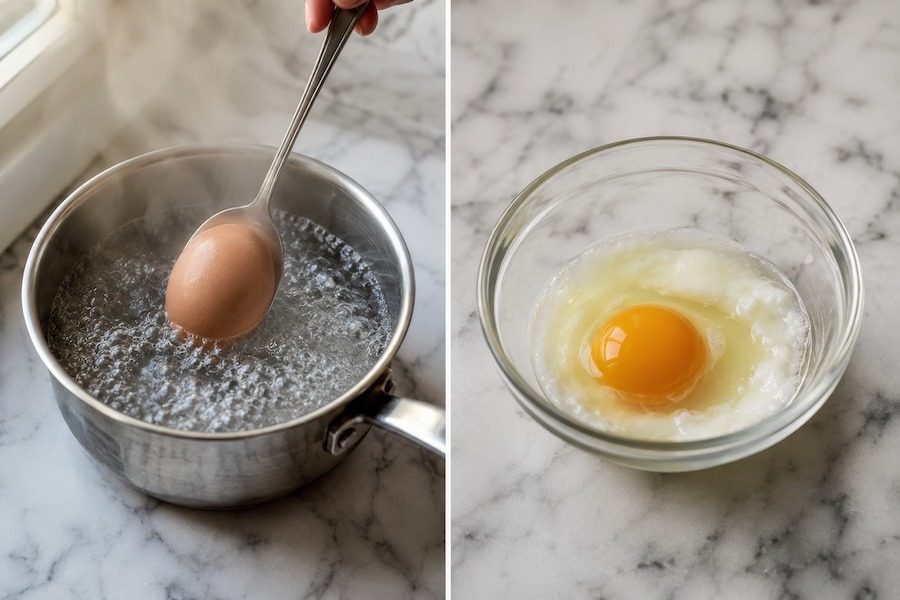
A side-by-side view of boiling an egg for coddling

Raw Eggs, Coddled Eggs, and Food Safety

  • Why eggs are in Caesar dressing at all: The yolk emulsifies the dressing — it binds the oil and acid together into something creamy and cohesive rather than a broken, greasy mess. You can't replicate that with water.
  • The raw egg risk: Salmonella is real but statistically uncommon in fresh, refrigerated eggs from a reputable source. The risk is low for healthy adults. It's not zero.
  • What coddling does: Sixty seconds in boiling water partially sets the white while leaving the yolk fluid. It reduces surface bacteria without cooking the egg through — you keep the emulsifying function while lowering the risk meaningfully.
  • If you want to skip the risk entirely: Use 1 tablespoon of good mayonnaise instead. Mayo is already an emulsified egg product — it does the same structural job. The dressing will be slightly richer and less bright, but most people won't notice.
  • Who should avoid raw or coddled eggs: Pregnant women, young children, elderly individuals, and anyone immunocompromised. For those groups, pasteurized eggs or the mayo substitution are the right call — no negotiation needed.

Frequently Asked Questions

Does a real Caesar dressing have anchovies in it? Yes — the original Caesar Cardini recipe did not, but most serious versions developed after it do. Anchovy paste adds umami depth, making the dressing taste complete. You won’t taste “fish” if it’s incorporated properly; you’ll just notice the dressing has more dimension than one without it.

Is it safe to use a raw egg in Caesar dressing? The risk is real but small with a fresh, quality egg. This recipe coddled the egg — 60 seconds in boiling water — which reduces the risk without eliminating the textural contribution a raw yolk provides. If you’re cooking for anyone who’s immunocompromised, pregnant, or otherwise cautious, use pasteurized eggs.

What is coddling an egg? Lower a whole egg into boiling water for exactly 60 seconds, then cool it under cold water to stop cooking. The white barely sets and the yolk remains fluid. It’s a middle ground between raw and soft-boiled, giving Caesar dressing a slightly more emulsified, stable texture than a fully raw egg.

Can I make Caesar dressing without a raw or coddled egg? Yes. Substitute 1 tablespoon of good mayonnaise — it’s already an emulsion and provides a similar creamy consistency. The flavor is slightly different but very close. Most people can’t tell.

What’s the difference between anchovy paste and whole anchovies in Caesar dressing? Paste distributes more evenly and disappears into the dressing without texture. Whole anchovies (mashed with a fork) give a slightly more pronounced flavor and a bit more variation. Either works — paste is more convenient and produces a more uniform dressing.

Why does my Caesar dressing taste flat? Usually, a salt issue, an acid issue, or both. Taste and adjust: add a squeeze more lemon first, then a pinch of salt, then reassess. Flat Caesar dressing is almost never a Parmesan problem — it’s almost always under-seasoned at the base.

Can I use a different mustard instead of Dijon? Dijon is best here because it’s smooth, relatively neutral, and emulsifies well. Whole-grain mustard changes the texture and adds visible seeds. Yellow mustard is too sweet and sharp. Dijon is the right call — it’s worth having a jar in the fridge if you don’t already.

How long does homemade Caesar dressing last? Because of the egg, no more than 2 days refrigerated. The acidity from the lemon helps a bit, but this is not a long-keeping sauce. Make it fresh, use what you need.

Do I have to use romaine lettuce for Caesar salad? Romaine is the right choice because its structure can withstand the weight of the dressing. Little Gem is the best substitute — smaller, sweeter, and equally sturdy. Avoid delicate greens like butterhead or arugula; the dressing overwhelms them.

What makes homemade croutons better than store-bought? Control and freshness. Homemade croutons are seasoned with actual garlic-infused oil and taste like bread that was intentionally turned into a crouton. Store-bought croutons taste like seasoning powder on dried bread. The baguette version in this recipe is genuinely worth the 15 minutes.

Explore More on This Topic

28 Responses

  1. 5 stars
    You say caesar, I say cesar…
    Whatever…
    I just loved the story, but more importantly, the recipe is very good.
    I made my dressing with the anchovy and It was great!

    This was the first time I stumbled upon your website, but I will return soon to check out more of your recipes. Hope they all are good as this one is!

    Cheers!
    Nicoletbfrom holland

    Ps might you wonder why you get so little response…..this captcha is a real challenge

  2. 5 stars
    This recipe is as good as my uncle’s, who used to work in a fancy restaurant. I’ve been making it for a couple of years, and it never gets old. Thanks for sharing.

  3. 5 stars
    Love this. It’s the first time I’ve ever made Caesar salad with my own homemade croutons. Lots of compliments…Thank you

    1. I have a recipe that includes red wine vinegar and Worcestershire sauce, plus you only use the egg yolk, no white. Very good. I’ve never tried it with capers, that sounds good.

  4. When coddling the eggs you say remove from heat and let cool off. Do you mean remove the eggs from water and let cool off or do you mean remove the pot of water with the eggs and let cool off?

    1. Lift the egg out of the water with a slotted spoon and run it under cold water for 30 seconds — you want to stop the cooking immediately, not let it continue in residual heat.

  5. 5 stars
    I blog often and I truly appreciate your information.
    Your article has really peaked my interest.

    I am going to take a note of your site and keep checking for new details about once per week.
    I opted in for your Feed too.

  6. 5 stars
    I’ve made this salad several times now. Every time I make it I get rave reviews–especially when I make the croutons, too. Never skimp on the garlic!

  7. Perhaps this is a stupid question, but how long does the dressing last in the fridge? After making this my SO hates store variety caesar and I’d like to be able to make some and leave it in the fridge for a week or two.

    Hi Sasha, I wouldn’t leave it for more than a couple of days but that’s me. I suggest you make as much as you need for your salad each time you make it because there are no preservatives in it.

  8. Wooden bowl for sure:
    For the salad: rub the bowl with the garlic ,then assemble the dressing and then the salad.
    The Sea Wolf Restaurant, 41 Jack London Square,Oakland,California. -1951 to 1985.
    At table only!
    a. puccini

  9. 5 stars
    Stumbled upon this recipe while searching for the perfect Caesar salad, and I’m glad that I can finally call off the search.
    Absolutely LOVED the result, the touch of capers is genius!
    I enjoyed your writing, and will definitely start following your blog.
    Thank you for sharing the recipe!
    Talya 🙂

  10. 5 stars
    Thanks for the recipe. I have had the original in Tijuana and created the tableside. I don’t usually eat mustard or anchovies, but the creation was fabulous. Also, the Beef Wellington is worth the wait 🙂

    1. Hi Jacquelyne, I like dijon for this recipe but you can try something else if you like a different mustard better. Over time you may try several different mustards to decide which you like best. Everyone’s tastes are different. Let me know if you come up with one you like better.

  11. This is not Caesar salad!

    If you add ANY anchovies, beyond those in the Lee
    & Perrins Worcestershire sauce, then it becomes “Aviators salad”.

    ALL true caesar salad dressings MUST be made into the romaine lettuce, and eaten on the spot. ANY “Caesar” dressings made and bottled are NOT Caesar salad dressings, including those marketed as “Cardini’s Original”.

    The Caesar salad is a Mexican invention, created by one of Cardini’s chefs, who’s name I will not print here. I have the original dressing recipe, given directly to my grandfather in 1922, before he died in the crash of a US Navy airship.

    I am in demand as a Caesar salad chef at friends’ parties, etc. I am thoroughly addicted to CS and eat it several times a week.

    For an addition to it (making it non-original, but really delicious) mix Asiago cheese to the Parmesan. NEVER use ANY vinegar if you want to keep it original.

    The raw or coddled egg is a must. As in the true original (Not served the first night when Cardini needed quick foodm but perfected later), I let my garlic oil reprosaire for a few days before using, to improve on the flavor.

    Always use Lee & Perrins Worcestershire sauce and Coleman’s dried mustard.

    I rarely use croutons, but when I do, they are homemade and cooked in garlic oil, with salt & pepper.

    I love all the varieties of “Caesar” salad recipes, however, and I have tried all of them, including this one here, which is delicious!! Keep em’ coming!!

    Fred

  12. 5 stars
    Like your Ceasar salad recipe in my opinion.
    In life you have to blow off the sour pussys, Debbie, downers or Karen’s, whatever.
    Ceasar salad makes me happy along side a bowl of lemon pasta.

Leave a Reply

Your email address will not be published. Required fields are marked *

Recipe Rating


This site uses Akismet to reduce spam. Learn how your comment data is processed.