
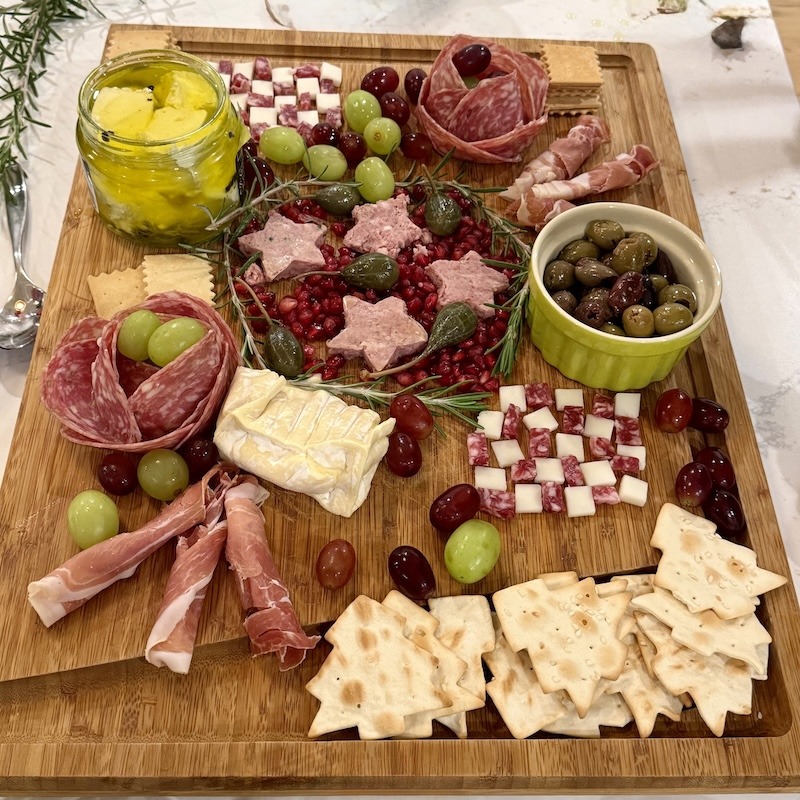

Everything You Need to Know About Charcuterie Boards
Charcuterie boards have become a trendy way to serve food at gatherings and events. These boards are typically composed of various cured meats, cheeses, fruits, nuts, and other small bites, arranged in an artful, visually stunning, and delicious manner.
In this blog post, we will delve into the history of charcuterie, explore how to create a charcuterie board, and offer some tips for serving and savoring this classic appetizer.
Charcuterie is a French term for the preparation of meat products, including sausages, pâtés, and cured meats. The practice dates back to ancient times, when humans first began preserving meat to extend its shelf life.
Over time, charcuterie evolved into an art form, with different regions of France and Italy developing their own distinctive styles of curing and preserving meats.
Today, charcuterie boards are a popular way to showcase these delicious meats and cheeses. Start with a large wooden board or platter to make a charcuterie board. You can also use a slate board, marble board, or any other flat surface that is easy to clean and won’t stain.
Next, choose your meats and cheeses. Some popular options include salami, prosciutto, brie, cheddar, and goat cheese. You can also add fruits, such as grapes, berries, nuts, and crackers, to round out the board.
When arranging the items on the board, start with the larger items, such as the cheeses and meats. Arrange them visually appealingly, using different colors and textures to create contrast.
Then, fill in the gaps with smaller items, such as crackers, nuts, and fruit. You can also add some herbs, such as rosemary or thyme, for a pop of color and flavor.
Providing your guests with the proper utensils is essential when serving a charcuterie board. Small forks and knives are grand for picking up meats and cheeses, while toothpicks are perfect for spearing fruit and other small items.
Also, ensure that napkins are provided, as charcuterie can be messy. One of the great things about charcuterie boards is that they are incredibly versatile.
You can customize them to suit any occasion, from a casual get-together with friends to a formal dinner party. You can also experiment with different meats and cheeses, adding new flavors and textures to keep things interesting.
Another benefit of charcuterie boards is that they are a great way to get creative in the kitchen. If you enjoy making cured meats and cheeses, a charcuterie board is the perfect place to showcase your skills.
You can also experiment with different flavors and spices, adding unique ingredients to create your signature charcuterie board.
Charcuterie boards are a timeless and delicious appetizer perfect for any occasion. Whether you’re hosting a dinner party, a casual get-together, or want to enjoy a tasty snack, a charcuterie board is sure to please. With a few simple tips and a bit of creativity, you can create a beautiful and delicious board that will impress your guests and leave them craving more.
How To Created A Charcuterie Board at Home
Preparing a charcuterie board at home is a fun and creative way to entertain guests or enjoy a snack with family and friends. Following these tips, you can create a beautiful and delicious charcuterie board that will impress your guests and make for a fun meal or snack experience.
| Tip | Details and Why It Matters |
|---|---|
| Choose a Variety of Meats and Cheeses | Include a mix of textures and flavors—soft, hard, aged, creamy cheeses; salty, spicy, mild cured meats. This ensures every guest finds something they enjoy. |
| Use Seasonal and Fresh Ingredients | Incorporate fresh fruit, veggies, or herbs that are in season for vibrant color, freshness, and balance to the rich meats and cheeses. |
| Balance Salt, Sweet, and Acid | Pair salty items (meat, olives) with sweet (fruit, jam) and acidic (pickles, mustard) components to create flavor contrast and complexity. |
| Pre-slice Cheeses and Meats | Make items easy to grab and eat—cut cheeses into wedges or cubes, and fold or roll meats for visual appeal and convenience. |
| Use Small Bowls for Wet Items | Contain olives, spreads, pickles, and mustards in ramekins to keep moisture from affecting crackers or cheeses. |
| Include a Variety of Carriers | Offer different textures: crusty bread, seeded crackers, baguette slices, or gluten-free options to complement soft and hard toppings. |
| Let Cheeses Come to Room Temperature | Remove cheeses from the fridge 30–60 minutes before serving to bring out their full aroma, flavor, and texture. |
| Arrange with Visual Appeal | Vary shapes and colors, layer items naturally, and fill gaps with herbs, nuts, or dried fruit to create an inviting, abundant look. |
| Label Unique Items | Use small labels or tags for less common meats or cheeses so guests know what they’re tasting—especially helpful for pairings. |
| Plan for Quantity | Estimate about 2–3 ounces of meat and 2 ounces of cheese per person. Add more if it's the main event, less if it's just an appetizer. |

What are they called in Italy?
In Italy, a charcuterie board is typically called an “antipasto board” or “tagliere di salumi e formaggi.” Antipasto is a traditional Italian appetizer that typically includes a variety of cured meats, cheeses, olives, and other small bites, often served on a platter or board.
Tagliere di salumi e formaggi translates to “board of cured meats and cheeses” and is a popular way to serve these delicious items in Italy. Regardless of the name, a charcuterie board or antipasto board is a delicious and versatile worldwide appetizer.
In Spain?
In Spain, a charcuterie board is often referred to as a “tabla de embutidos y quesos” or a “tabla de ibéricos”. A “tabla” means “board” in Spanish, and “embutidos y quesos” translates to “cured meats and cheeses.”
“Ibéricos” refers specifically to the high-quality cured meats made from the Iberian pig, which is native to the Iberian Peninsula of Spain and Portugal. These meats are often the centerpiece of a Spanish charcuterie board, alongside cheeses, olives, and other small bites. Like Italian antipasti or French charcuterie, Spanish charcuterie boards are a delicious and colorful way to showcase the country’s rich culinary traditions.
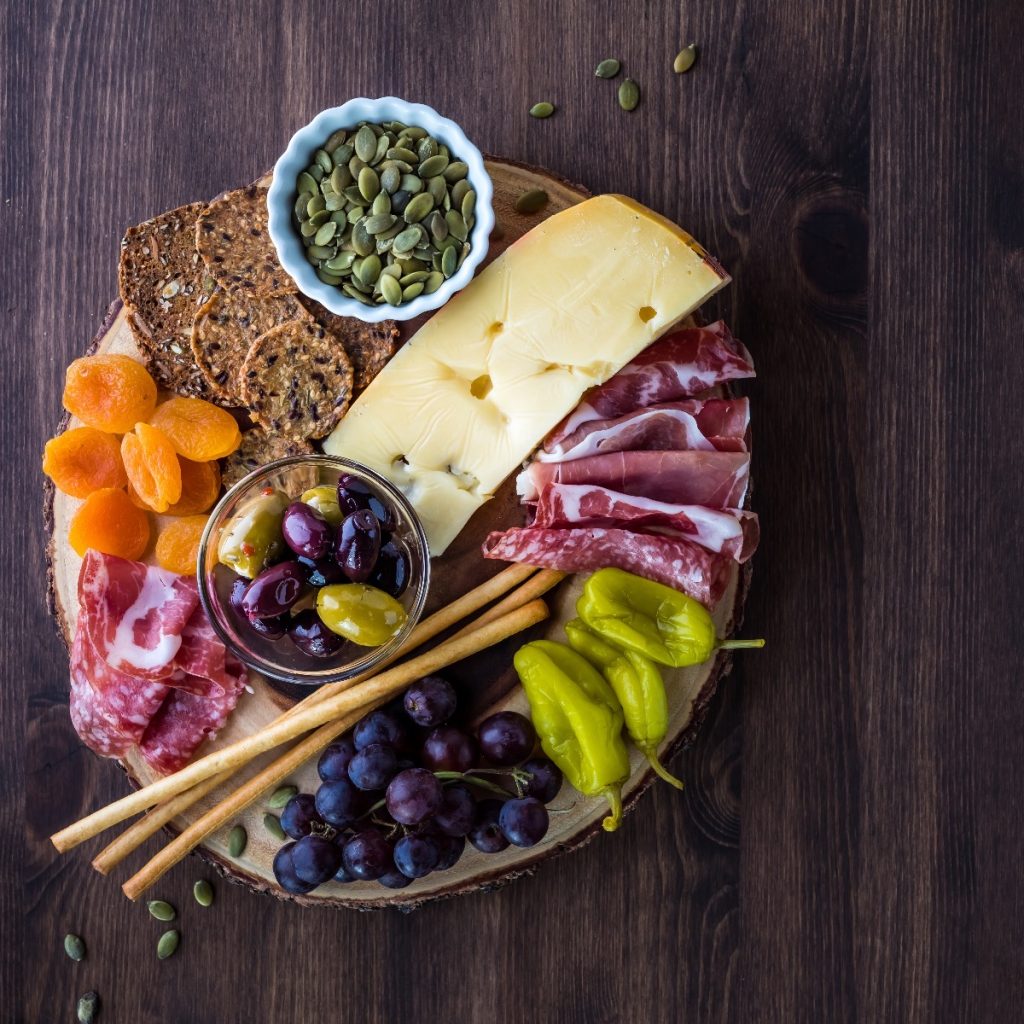
Types of charcuterie boards and their included ingredients.
The key is choosing ingredients you love, working well together, and arranging them on a board appealingly and attractively. Whether serving a board at a party or enjoying one at home with family and friends, a well-crafted charcuterie board will surely delight and impress.
| Charcuterie Board | Typical Ingredients | Wine Pairings |
|---|---|---|
| Classic French Charcuterie Board |
Prosciutto, salami, pâté, terrine, Brie, Camembert, blue cheese, Olives, nuts, bread, crackers |
Red Burgundy (Pinot Noir), Champagne, Sauternes (for blue cheese) |
| Italian Antipasto Board |
Prosciutto, salami, mortadella, Provolone, Parmesan, mozzarella, Marinated artichokes, roasted red peppers, Olives, nuts, breadsticks |
Chianti, Barbera, Prosecco |
| Spanish Charcuterie Board |
Jamón ibérico, chorizo, Manchego, Cabrales, Marinated olives, almonds, rustic bread |
Tempranillo, Albariño, Cava |
| Vegetarian Charcuterie Board |
Brie, cheddar, goat cheese, Marinated vegetables (artichokes, peppers), Nuts, fresh and dried fruit, Bread, crackers |
Sauvignon Blanc, Rosé, Chardonnay |
| Vegan Charcuterie Board |
Vegan cheeses, Marinated vegetables, nuts, fruit, Hummus, vegan crackers, bean/vegetable dips |
Dry Riesling, Sparkling Rosé, Pinot Grigio |
| Seafood Charcuterie Board |
Smoked salmon, tuna, shrimp, Anchovies, mussels, Soft cheeses, olives, grilled vegetables, Crackers or crusty bread |
Champagne, Sauvignon Blanc, Vermentino |
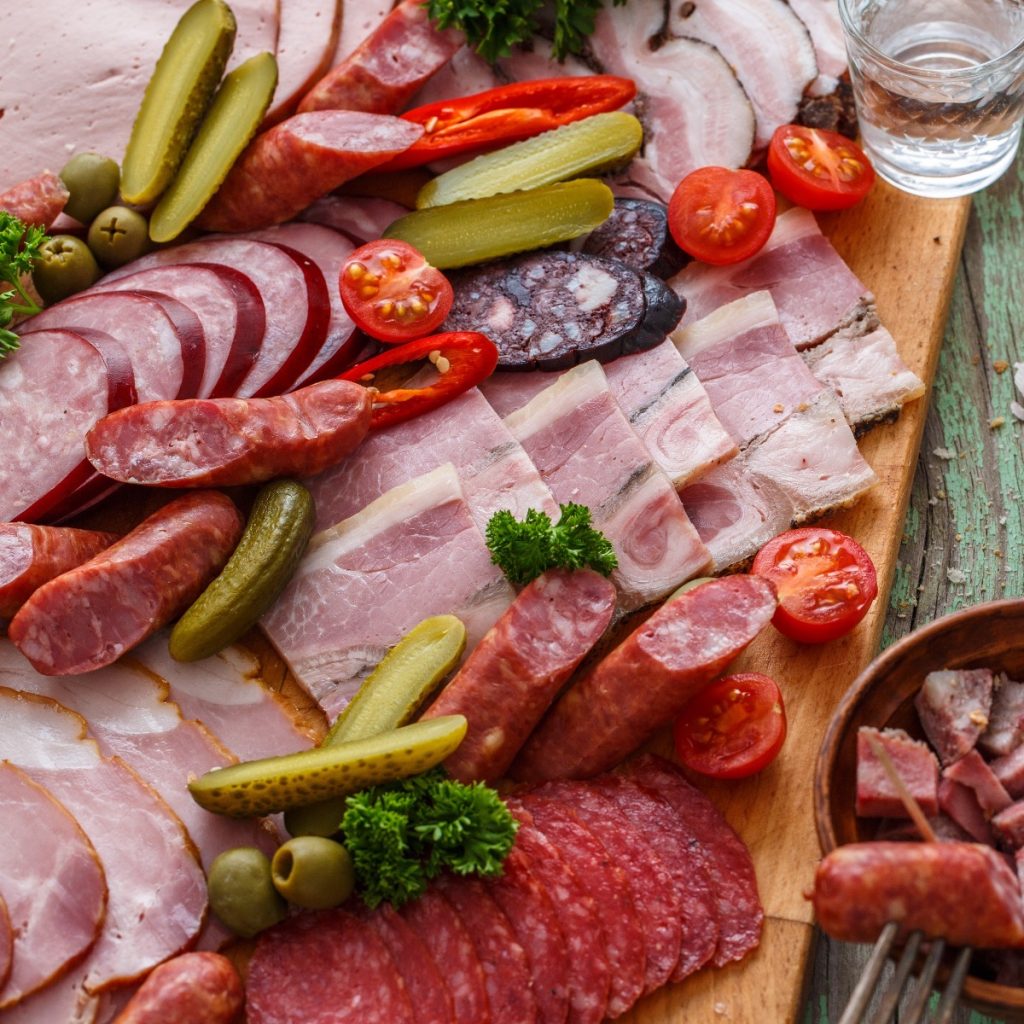
History of Charcuterie Boards
The charcuterie board, as we know it today, is a modern interpretation of a much older culinary tradition. Curing and preserving meats dates back to ancient times, when people needed to find ways to make their food last longer. Over time, the art of charcuterie evolved, with different regions of France and Italy developing their own unique styles of curing and preserving meats.
The modern charcuterie board, however, is a more recent invention. It is believed to have originated in France during the 15th century when the nobility would serve large platters of meats and cheeses at their lavish banquets. These platters were often served on large wooden boards, known as “charcutiers,” which the charcutiers, or butchers, used to prepare their meats.
The charcuterie board became popular in the United States in the 1970s and 1980s, when artisanal cheeses and cured meats began to gain popularity. Today, the charcuterie board has become a ubiquitous fixture at parties, weddings, and other social events.
While it’s difficult to pinpoint precisely who “invented” the charcuterie board, it’s clear that it has a long and rich history, spanning centuries and cultures. The practice of serving meats and cheeses on a platter has evolved, with each generation adding its unique spin to the tradition.
Today, the charcuterie board continues to be a beloved and versatile way to showcase the best of the culinary world, whether you’re a professional chef or a home cook looking to impress your guests.
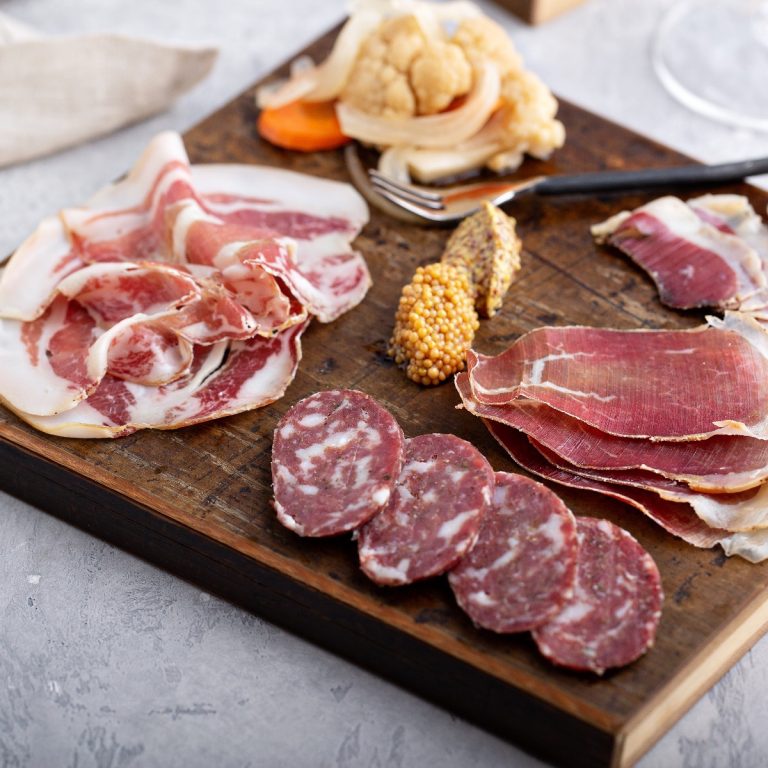
When do you serve a charcuterie board?
Charcuterie boards can be served for various occasions, from casual get-togethers with friends to more formal events like weddings and corporate gatherings. Here are some of the most common times when a charcuterie board might be served:
- Cocktail parties: a great option for cocktail parties, as they offer a variety of small bites that can be enjoyed with drinks.
- Dinner parties: a great way to kick off a dinner party, offering guests a variety of appetizers to nibble on before the main course is served.
- Wine tastings: a classic accompaniment to wine tastings, as they offer a variety of cheeses and cured meats that pair well with different types of wine.
- Brunches: an excellent option for brunches, offering guests a range of sweet and savory options.
- Outdoor gatherings: an excellent option for outdoor gatherings like picnics or barbecues, as they offer a range of options that can be enjoyed al fresco.
Ultimately, charcuterie boards are incredibly versatile and can be served for any occasion where small bites and finger foods are appropriate. Whether hosting a formal dinner party or a casual get-together with friends, a well-crafted charcuterie board will impress and delight your guests.