
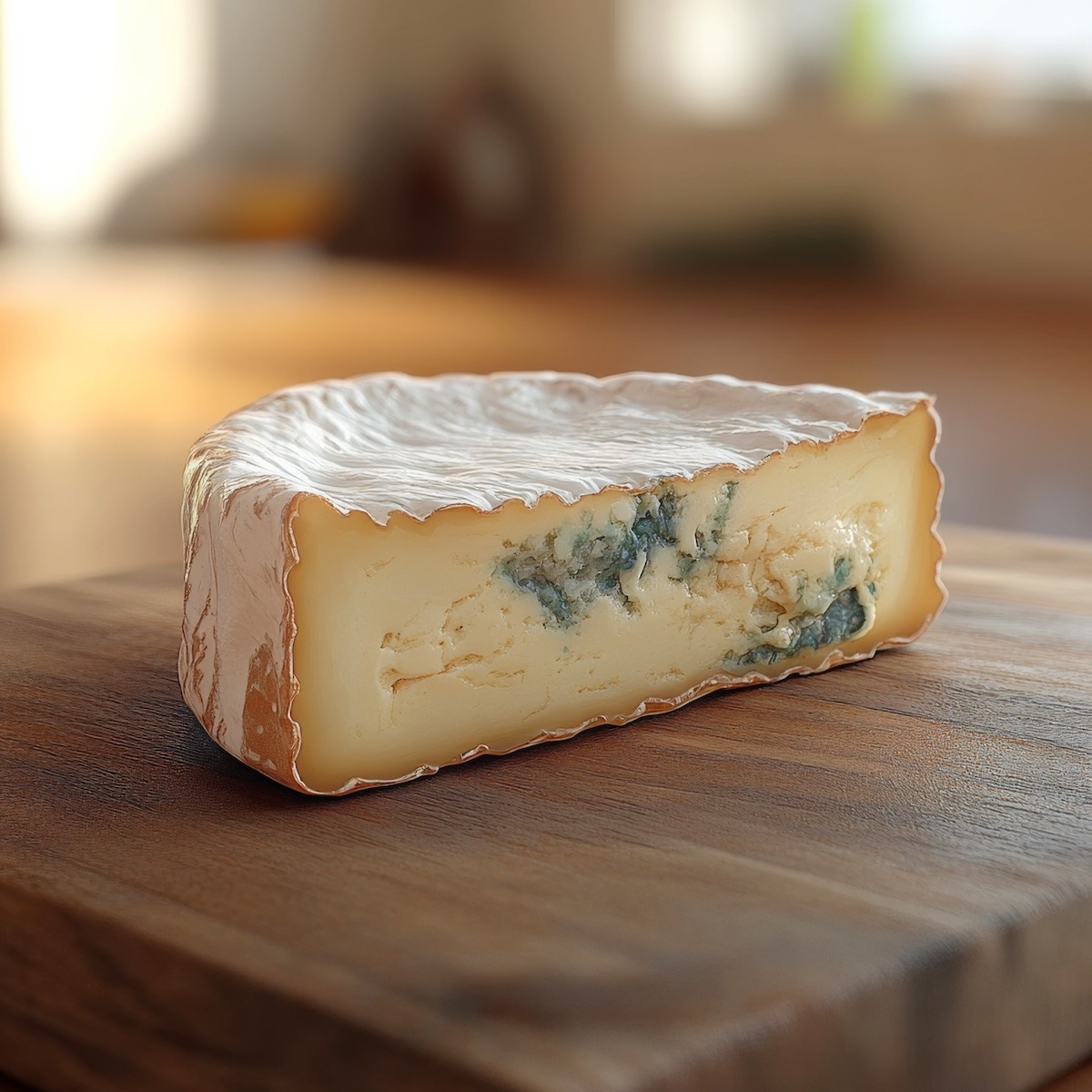
Moldy Brie cheese can be confusing—edible, inedible, safe, or risky? Knowing the difference isn’t just about avoiding a stomachache; it’s about appreciating the cheese at its best. This guide explains which molds are harmless, which signal trouble, and how to handle Brie properly so every bite is delicious and safe.
🧀 Moldy Brie Quick Guide
Can you eat Brie mold?
- ✅ Normal white rind: Safe, edible, part of the cheese.
- ⚠️ Unusual mold (green, black, pink, orange): Sign of spoilage — toss it.
- ❌ Soft cheese tip: Unlike hard cheeses, you cannot just cut off mold; spores penetrate deep.
- 👶👵 High-risk groups (pregnant, elderly, immunocompromised): Avoid moldy soft cheeses.
- 👃 Check smell & texture: Off odors or sliminess = discard.
Bottom line: Enjoy the normal rind. Any unexpected mold? Play it safe — throw it out.
Can You Eat Brie Crust Even Though It Is Mold?
Bill Overton asked on my blog posting Learning About Cheese, “Can you really eat the moldy brie cheese? I’m always afraid to eat it, but I have a friend who knows a lot about food, who says it’s okay to eat”.
I’m not sure whether Bill was referring to the outer rind (skin, crust) on Brie, a mold in itself, or to the mold that develops on the outer skin. So let’s start by looking more closely at Brie.
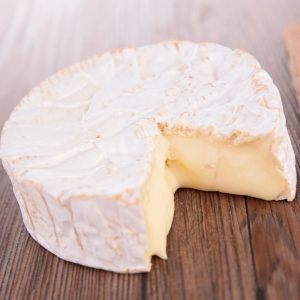
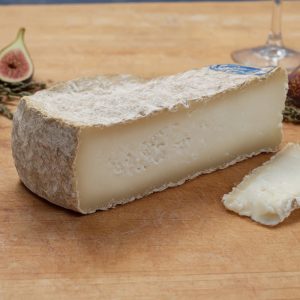
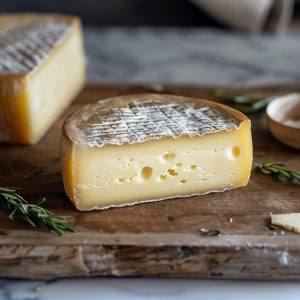
Brie is a soft-ripened cow’s-milk cheese with a bloomy rind. It gets its name from the town it originated in, France. The outside casing is a white mold that often has an ammonia smell, making it unappealing to some.
Brie is made much like other cheeses: rennet is added to raw milk, heated to the right temperature, then poured into containers and allowed to drain for hours. It is then removed from these containers, salted, and sprayed with a “good” mold, such as Penicillium candidum. It is then aged in a cellar for four to five weeks.
During this time, the cheese ripens from the outside in because of mold introduced to the surface. As Steven Jenkins’ Cheese Primer says, “The bacteria slowly penetrate the interior, turning it from a chalky, crumbly, bland cheese into a soft, nearly liquid wonder.”
So Is Moldy Brie Edible
Brie cheese naturally carries a white, edible mold on its rind. This mold, called Penicillium candidum, creates the soft texture and signature flavor. You can safely eat this rind, and it forms an integral part of Brie. Many people enjoy it exactly as the cheesemaker intended.
However, unexpected mold growth on Brie signals a problem. If you see green, black, pink, or orange mold on the cheese, it indicates spoilage. Soft cheeses like Brie have high moisture, allowing harmful mold to spread throughout the cheese, even if you see it only on the surface. Cutting away the mold does not remove it safely, because spores penetrate deep into the cheese. Eating spoiled Brie can cause nausea or other foodborne illness symptoms, especially in vulnerable groups.
People who are pregnant, elderly, very young, or immunocompromised should avoid soft cheeses with any unexpected mold. Always check smell and texture: off odors, sliminess, or unusual colors are signs to discard the cheese.
Brie’s natural white rind mold is edible and part of the cheese, but any unusual mold growing on Brie after purchase is a sign of spoilage. Because soft cheeses can harbor unseen mold throughout, it’s safest to throw it out rather than try to trim it.
| Cheese | Texture | Mold Type | Fuzzy Mold Growth? |
|---|---|---|---|
| Brie | Soft | White rind (Penicillium candidum) | ❌ Do not cut off; toss if unusual mold appears |
| Camembert | Soft | White rind (Penicillium camemberti) | ❌ Do not cut off; toss if unusual mold appears |
| Gorgonzola | Soft / semi-soft | Blue mold (Penicillium roqueforti) | ❌ Do not cut off; toss if unexpected mold appears |
| Roquefort | Semi-soft | Blue mold (Penicillium roqueforti) | ❌ Do not cut off; toss if unexpected mold appears |
| Parmesan (Parmigiano-Reggiano) | Hard | No intentional mold | ✅ Can cut off mold at least 1 inch around it |
| Cheddar (aged) | Hard | No intentional mold | ✅ Can cut off mold at least 1 inch around it |
| Swiss (Emmental) | Hard | No intentional mold | ✅ Can cut off mold at least 1 inch around it |
| Blue Stilton | Semi-hard | Blue mold (Penicillium roqueforti) | ❌ Do not cut off; toss if unexpected mold appears |
| Feta | Semi-soft | No intentional mold (brined) | ❌ Toss if mold appears |
Moldy Brie Cheese FAQ
Is the white mold on Brie safe to eat?
Yes. The white rind on Brie is a naturally occurring, edible mold called Penicillium candidum. It’s part of the cheese-making process and gives Brie its creamy texture and flavor. Healthy adults can safely eat it.
What if I see green, black, pink, or orange mold on my Brie?
That is a sign of spoilage. Soft cheeses like Brie have high moisture, allowing harmful mold to penetrate the cheese deeply. You should throw it out rather than try to cut the mold off.
Can I cut off moldy spots on Brie and eat the rest?
No. Unlike hard cheeses, mold in soft cheeses spreads below the surface. Trimming it won’t remove all spores, so it’s safest to discard the cheese.
How can I tell if my Brie has gone bad?
Look for unusual colors, slimy textures, or off odors. If any of these are present, discard the cheese immediately.
Are there people who should avoid mold-ripened Brie entirely?
Yes. Pregnant women, young children, the elderly, and people with weakened immune systems should avoid soft mold-ripened cheeses, including Brie.
Can Brie make me sick?
Eating spoiled Brie with unexpected mold can cause foodborne illness, including nausea or stomach upset. Always check for spoilage before eating.
How should I store Brie to prevent spoilage?
Keep Brie refrigerated in its original packaging or wrapped in wax paper and stored in a breathable container. Consume it within the recommended date on the package.
Can I freeze Brie to extend shelf life?
Freezing is possible but may affect texture and taste. Soft cheeses often become crumbly or watery after thawing.
Does the rind of Brie ever go bad?
The rind is safe to eat unless it develops unusual colors, textures, or smells. Only unexpected mold growth on the rind indicates spoilage.
What is the bottom line?
Enjoy Brie’s normal white rind. If you see fuzzy or colored mold beyond the rind, do not risk it — toss the cheese. Safety comes first, and properly stored Brie will stay creamy and delicious.
A Little Brie History
I just picked up a used book called An Illustrated History of French Cuisine, published back in 1962 and in it, they talk about Charlemagne’s (King of the Franks from 768 AD until his death in 814 and one of the first gourmands) first experience with Brie when he stopped by the monastery of Reuil-en-Brie to rest while returning home from a tiring day of battle with his Knights.
Here is what the author writes,
“The abbot ordered up from the cellars some of those marvelous cheeses, the fame of which in later years was to spread far beyond the borders of Brie. Charlemagne and his knights feasted well. At the first mouthfuls, however, everyone made the mistake of removing the crust. One of the monks respectfully called their attention to their error, whereupon the gentlemen abstained and willingly agreed that the advice was excellent.
“I thought I knew everything that could be eaten, ‘ exclaimed Charlemagne before the end of the meal. ‘It was only vanity on my part… I have just discovered in this cheese one of the most delectable foods imaginable. ‘
And he added;
‘I desire that twice a year a goodly quantity of these cheeses of Brie be brought to my palace at Aix-la-Chapelle… And I pray you to see to it especially that they have a good consistency and also a good crust!’ “
50 Responses
Thank you so much for such an informative post! I am trying Brie for the first time and this was the first good bit of information that told me exactly what I wanted and needed to know about Brie’s moldy rind. THANKS!!
any mold like this on brie its not good for youre body and even gorgonzola which is rotten is not healthy for you either..thanxs and god bless
I just opened up some Brie that was in the fridge for a little while and the rind had sort of spread out by molding onto the sections that it had been cut off of. I just cut it off and ate it – tasted great to me!
Then I got a little worried just in case I wasn’t supposed to do that (although I do it to harder cheese all the time), so I stumbled across this site. Glad to know it won’t hurt me, but I’ll tell you – it tastes fine!
I bought some Brie on July 30th, it does not have an expiry date, it has not been opened, is it still good to eat? No apparent discoloration…Today is August 14th.
Should still be good
You bought the Brie on July 30th, and today is August 14th, so it has been 15 days. Since it’s unopened, shows no discoloration, and has been properly refrigerated, it is likely still safe to eat. Unopened Brie typically lasts about 1–2 weeks past its sell-by date, though soft cheeses are more perishable than hard cheeses. Before eating, check for any signs of spoilage: the rind should remain white or slightly off-white, the smell should be mild and creamy (not sour or ammonia-like), and the texture should be soft but not slimy or watery. Soft cheeses like Brie can harbor harmful mold inside, so if anything seems off, it’s safest to discard it. If all looks and smells normal, you can enjoy your Brie, but it’s best to eat it soon to ensure freshness and safety.
If it hasn’t been open, doesn’t have any fuzz on it or doesn’t smell off, I would eat it. Saying that, you might want to ask the cheese person where you purchased it?
I’ve had this Brie cheese for nearly two weeks now. I just opened it after a few days without eating it, and it seems that there is a white sort of fuzz on the left side of the wedge, it’s on the rind and cheese. Do I cut it out and eat the rest, or throw it altogether?? Help. I’m hungry.
Brie is a soft, mold-ripened cheese, and while its normal white rind is edible, any fuzzy white mold growing after opening is not part of the intended rind. Soft cheeses like Brie have high moisture, allowing mold spores to spread deep into the cheese, even if you only see it in one spot. Because of that, you cannot safely cut away the mold and eat the rest. Eating it could put you at risk of foodborne illness.
Bottom line: Toss the wedge. It’s not worth taking the risk. For future reference, Brie should be refrigerated immediately after purchase, ideally consumed within 1–2 weeks, and checked for unusual molds or off smells before eating.
I’ve always wanted to try Brie cheese but was afraid I wouldn’t like it and it would go to waste. Recently at a wake I ate some and it was wonderful. My daughter is shopping for me in Albuquerque for our family Christmas festivities and at the top of the list was Brie cheese. I love this site it is very informative. Thank you for sharing.
You are very welcome Connie and glad you are enjoying the Reluctant Gourmet web site. Do I have to ask or will you tell your friends about it. Thanks and Happy Holidays – RG
I ate some baked Brie cheese for the first time = Not knowing not to (since I have a penicillin allergy) I ended up with severe stomach pains and passed out — do not eat this if you are allergic to penicillin!
Great point Denise. As I say in the post, “The mold used to make Brie and Gorgonzola will not hurt you unless you are allergic to mold. ” Can you tell us what other foods you have to avoid when you are allergic to penicillin? – RG
I have read conflicting responses on other sites about the ammonia smell to the Brie. The rind is pure white, and the cheese is a beautiful color, but the ammonia smell is throwing me. I have never tried this particular kind until tonight–Martin and Collet French Brie. I don’t know that I’ve had a French Brie before, but I do not recall it smelling like ammonia. Please help!
Brie naturally develops a slight ammonia-like aroma as it ripens, especially when fully aged or freshly opened. This scent comes from the breakdown of proteins by the mold on the rind and is generally not harmful. Since your Brie has a pure white rind and a creamy, normal-colored interior, it looks healthy. A mild ammonia smell at the surface is normal and often fades after a few minutes at room temperature. You only need to be concerned if you see fuzzy, unusual mold (green, black, pink, or orange), notice a slimy texture, or detect a strong sour or rotten odor. If none of these spoilage signs are present, your Brie is safe to eat, and trimming the rind slightly can reduce the ammonia smell if it bothers you.
This looks more like a Camembert than a Brie cheese. (hello from France)
Bon Jour Fifi, I see what you mean, they look very similar. I think of Camembert as having a more textured exterior. – RG
I, too, have a penicillin allergy (once even required hospitalisation) and I eat brie, albeit in small amounts, with no ill effects.
I love Brie cheese. I have never eaten the mold or even tried it because when I was a child I developed allergies to Penicillin due to the fact that I was treated with this for a long time after being diagnosed with Rheumatic Fever. I am now 56, live a whole foods lifestyle so cheese is a major staple for me. I have never had any problems with Brie cheese but I would not take a chance with eating the mold because of the Penicillin.
Penicillin?!!!! I am allergic to penicillin, that is probably why I get tired and sleepy after eating Brie cheese which is one of my favorites
Should the outer white “good mold” casing actually taste like mold? It’s just that I’ve heard so much about brie tasting so good, that I started wondering if it is actually supposed to taste like mold.
The white rind on Brie, made from Penicillium candidum, does have a mild, earthy, mushroom-like flavor, but it shouldn’t taste harsh or overwhelmingly “moldy” in a way that’s off-putting. Most people find it creamy, nutty, and slightly tangy, which complements the soft interior rather than dominating it. The rind is edible and part of what makes Brie distinct, but it’s naturally subtle—if it tastes bitter, sour, or unusually strong, that could indicate the cheese is overripe or starting to spoil. In general, the “good mold” rind enhances the cheese’s flavor without tasting like the unpleasant mold most people worry about.
I share the same issue as Diane, i am allergic to penicillin and had brie for the first time. The exact same thing happened to me! Past out and had horrible extreme stomach cramps. I found this site on my desire to find a answer to my issue. Thank you so much for sharing this info will us! Very appreciated!
It is Derby week here in Kentucky and our local Krogers had a recipe for a “Derby burger”, involving pears, Bourbon and brie cheese. I had never bought brie before yesterday, but I picked up a wheel of Private Selection (aka Kroger brand) “Parisian Style Lite Brie”. I noted that the sell by date was today but I am using it tonight. I opened the brie earlier to check it out, and the rind is kind of a patchy dull gray color and it smells like mold, but not in a bad way. By what you say, I am pretty sure it’s safe to eat. Especially since I don’t plan to eat the rind due to seasonal mold allergies. Am I right in assuming it’s safe??
Yes, your Parisian Style Lite Brie is likely safe to eat, as the patchy gray rind and mild moldy aroma are normal for this soft-ripened cheese.
Hi Reluctant Gourmet,
This question isn’t about brie in particular but another soft cheese. I just ate some Saint-Andre that tasted “off”–the smell was okay, kind of floral, but the taste was like gasoline, the kind of thing that could probably be described as an ammonia taste. The rind was not especially discolored, but the inside was the color of peanut butter. I’ve begun to flip out and have started worrying about dying of food poisoning–I have no physical symptoms right now, but I’m very worried. Do you know anyone who has eaten spoiled Saint-Andre and lived to tell? I was completely unacquainted with the cheese, so it took me a few bites to realize that the gasoline/ammonia flavor probably wasn’t intentional. I’d be glad to hear back from you.
P.S. I forgot to mention that I couldn’t find an expiration date on the package. The cheese was produced by Ile de France and purchased at Trader Joe’s, if that means anything to you.
If the Saint-André tasted strongly like gasoline or ammonia, even with a normal-looking rind, it may be spoiled, and it’s safest not to eat any more.
We had Fresh Asiago fondu tonight and I developed an alergic reaction in my mouth and on my tongue. I know I have enjoyed this cheese before so I was mystified. Turns out my husband included the rind in the cheese mix. Everything I’ve read said the rind is not edible. Do you know what it’s made of that may have caused such a reaction? Should the family be concerned since we all shared the great fondu?
What if it is white mold growing on it in the place that have been cut?
yeah, i wouldn’t eat it either–we’re not “real” cheese men, it seems haha.
no seriously: typically the green mold, didn’t come with the cheese… so it would skeeve me out.
Love your site!
My girlfriend did not eat the crust when we first met and I convinced her to try it. When she tried it she liked it, then I made the mistake of telling her it was mold and she would never eat it again after that.
Too funny Paul. That will teach you.
Glad to have found this site. Please tell me what you think? as I am a bit worried now . A few days ago I bought 4 wheels of French Brie that are on ‘best before’ date is today. The wheels are 1 kg each, and were normally $26 each, but reduced down to $2.50 each. Was so excited that I bought the 4 wheels. Upon opening, the mold rind was patchy and ‘deflated’ and not white anymore, more like a tan colour,and the inside was a lot more solid than brie, and the colour of pale peanut butter. It was also deliciously stinky, like sweaty socks- yum. Being a huge brie fan and an even bigger cheapskate, I got stuck in and made a coconut & mango and brie salad, and was delicious. I have put the rest of the wheels into the freezer, as cant possibly eat that much cheese at once. So asking: have I ruined the cheese by putting it into the freezer? And is it ‘normal’ and is it SAFE to eat since its not white and goo-ey anymore ? And if the cheese was left long enough, would it ‘morph ‘ into another stinky cheeze like gorgonzola? And, If I make a baked brie /mango chicken and rice dish with that cheese, who’d be game to eat it?Thanks for all your help 🙂
Wow, that’s a mouthful Leanne. This one’s over my head. I’ll try to ask a couple of my cheesemonger friends and see what they have to say but in the meantime, I would suggest you go back to the cheese shop where you purchased them and ask one of their experts. I’ll see what I can find out.
Thanks for your reply
It was a supermarket RG, so no cheese experts there. It was a French Brie.
The good news though is that I am still alive, albeit a bit snuffly due to the dairy (or the mould? who knows).
I also suspect that I smell a little cheesy, I have eaten a lot of it over the last week since buying
Had to throw the remains of the refrigerated one out this morning. The smell was a bit much, was stinking up the whole fridge
It still leaves me the 3 frozen cheeses, which I can slice off a little at a time to use. Will be good to slow down for sure.
Didnt ever think I could get sick of cheese !
The rind is the best part… It is a big waste to cut it away (unless you can’t eat it for medical reasons). I think the center part of brie cheese has little taste, the rind gives it a full flavor.
Just my $0.02
I just opened some “Parisian Style Brie” from Kroger’s Private Selection brand that had an almost five month past “sell by” date of April 14, 2014 (that had been languishing in the basement fridge). It had speckling on the rind and it was a little darker and more ammoniatic than typical Brie, but I warmed it on some Breton crackers and mmmm mmmm mmmm, delicious. I’ve never tried the Parisian style before so don’t know if it has changed much, if at all, since it was purchased. I will, of course, follow up if I suffer any ill effects, but I think I’m good and the dogs are jealous.
Thank you for this post. Just got into trying different cheese to expand my pallet and I’ve had brie before but pre cut and prepaired. Was scared about the smell but this post helped. Can’t wait to learn about other cheeses. Today’s reading will just brie and its history. Thank you to everyone.
Is there a way to buy Brie that has the crust already cut off? Maybe just me, but I found it a bit difficult to simply slice it away with a knife although it was easier the warmer the cheese got.
Also, I have heard of baking Brie wrapped in a pastry puff dough. Have you done this and do you have a good recipe? The one I saw was for Brie in the pastry with a tablespoon or two of raspberry preserves. That CAN’T be bad!
Hi Michelle, I have never heard of Brie with the crust already cut off. Why do you want to cut it off? I don’t think it is possible, but you never know. Here’s my recipe for Brie en Croute or Brie in Puff Pastry … https://www.reluctantgourmet.com/brie-en-croute/
Just a small addenda to the Charlamagne story. A noted UK academic states that a few years after the famous visit troubled times came upon the Abbey at Brie and barbarous hordes were running amok over the land. In order to save themselves many monks fled Brie to seek safety in other monasteries. One such monk was making his way to the Abbey of Bath in England, when he fell ill in Normandy. A village woman took him in and nursed him back to health. To show his gratitude, and having nothing else to offer, he gave her the secret of Brie cheese. The name of her village was Camambert.
Great story Steve. Thanks for sharing.
I just thought you should know that I ate a half of a small wheel of double brie while reading these comments. Now I feel fat and lazy. But to me brie is one of the most decadent cheeses one can eat, and there really is no wrong way to eat it. Rind…no rind…whatever, don’t pass up on a good brie. It’s addictive and rewarding, just don’t eat half a wheel…lol
I hope you feel better soon Jason.
Costco sells their 13.4 oz wheel of Signature Kirkland Imported French Brie made by Isigny Ste Mère for approximately $5.50. I think this is a great value. Generally, my husband & I open this cheese up right away and eat it over the course of a week, before or at it’s sell by date. We eat the white rind as well as the inside. A long time ago, someone told me the outside of brie was covered with flour! Well, I am glad to know the truth and will still eat the outside. The question I have is what to do with a very mature brie? I have a round that is a month past it’s sell by date, and it has a slightly funky smell. The white mold has developed a little bit of red mold here and there. Any suggestions? Thanks!
A very mature Brie that is a month past its sell-by date and has developed red mold is no longer safe to eat, because soft cheeses allow mold to penetrate deep into the interior, and unusual colors like red indicate spoilage; the safest option is to discard the wheel, as trimming will not remove all harmful spores, and consuming it could cause foodborne illness.
My son told me one of the cheeses he offered for appetizer was Brie and I liked it so I bought a wheel. I opened it and took a bite and couldnt stand the taste or smell so promptly threw it in the garbage. The cheese my son offered wasn’t a gooey cheese, had no rind and did not smell like mold. I do have a common mold allergy but not to penicillin. Frankly the brie tastes and smells so bad to me…and the mold smell so overwhelming I find it hard to believe all of the aforementioned praise regarding its delectable delicious taste…YUCK!!!
I read that if you heat the cheese thoroughly the mold or penicillin will not harm you. Is this true?
Thoroughly heating soft cheeses like Brie does not make them safe to eat if they have developed harmful mold, because some toxins produced by unwanted molds and bacteria are heat-stable and can survive cooking. While cooking may kill the live mold spores, it does not neutralize mycotoxins or other harmful compounds that could make you sick. For soft cheeses, it’s safest to discard any cheese showing unusual mold, off odors, or discoloration, rather than relying on cooking to make it safe.
Hi, great site and very informative. My question: My wife went to a party once (I didn’t go that time) and brought me a piece of Brie that had supposedly been baked with honey and species. It tasted sublimely. I asked her if she asked for the recipe, but she didn’t. I have never found on the internet a recipe for something like this, can you help find this recipe, would GREAYLY appreciate it! Roland.
Roland, thank you for your kind words. I will see what I can do.
Olá, ótima matéria, uma dúvida, comprei um brie e achei que tinha muito mais “mofo” do que o normal, raspei um pouco e abaixo do branco tem umas manchas verdes, é normal??
No me parece normal y no lo comería.