
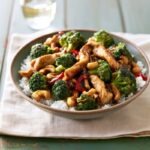
Chicken and Broccoli Stir Fry with Cashews & Oyster Sauce

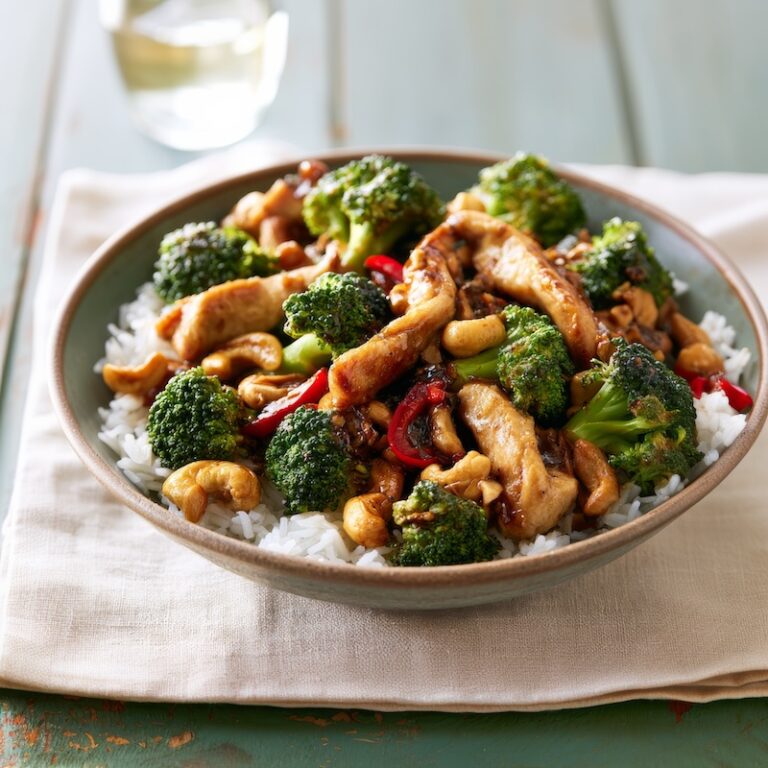
A wide bowl of chicken and broccoli stir fry over steamed jasmine rice, golden-edged chicken thigh strips and vivid green broccoli florets

The Reluctant Gourmet Newsletter Is Back!

Yes, I'm starting up a new newsletter with step-by-step recipes, helpful cooking tips, and my latest funny cooking cartoons. Would love to have you on board.

Chicken and broccoli stir fry is one of the most ordered Chinese-American dishes in the country, which means most people have a reference point for what it should taste like. The restaurant version has tender, almost silky chicken and vivid green broccoli that still has some bite. The home version usually has dry chicken and olive-colored broccoli that's been in the wok too long. The difference comes down to two techniques most home cooks skip entirely.

Fast Answer

The two techniques that separate restaurant chicken and broccoli stir fry from the home version are velveting — marinating the chicken in cornstarch to create a silky texture — and blanching the broccoli before it goes in the wok so it cooks in seconds rather than minutes and stays vivid green. Use chicken thighs for a juicier result. The marinade does double duty as the sauce. Total time is about 45 minutes including marinade.

Chicken and Broccoli Stir Fry — Why Thighs Win

Chicken and broccoli stir fry is one of those dishes that looks simple and tastes mediocre when you skip the technique, or tastes genuinely good when you don’t.

The technique here isn’t complicated. It’s a simplified velveting marinade, a blanched vegetable, and a wok hot enough to do real work. This post explains what each step is doing so you understand the dish, not just the recipe.

New to Stir Frying? Start Here First

  • Before you cook this recipe, it's worth spending five minutes with my dedicated post on How to Stir Fry — it covers wok selection, heat management, the order of operations, and the most common mistakes home cooks make.
  • What you'll learn there: Why pan temperature matters more than any ingredient, how to manage a home burner that isn't as powerful as a restaurant wok station, and why mise en place is non-negotiable in stir fry cooking.
  • If you've already read it — or you've made stir fry before and know the basics — jump straight to the recipe below. The technique notes here build on that foundation rather than repeating it.

What Velveting Is and Why This Marinade Does It

The reason chicken at a good Chinese restaurant has that distinctly silky, tender texture — almost impossibly soft compared to the home version — is a technique called velveting (過油, guò yóu). In professional kitchens, velveting typically involves coating protein in a mixture of cornstarch and egg white, then briefly passing it through warm oil or water before the final wok cook. It coats the exterior of each piece and seals in moisture under high heat.

This recipe uses a simplified home version of the same principle. The cornstarch in the marinade coats the chicken strips as they soak. When the chicken hits the hot wok, that starch coating sets immediately — sealing the surface before the interior moisture has a chance to escape. The result is chicken that stays tender even under high heat, rather than going stringy and dry the way uncoated chicken breast often does.

The marinade here — chicken stock, dry sherry, soy sauce, oyster sauce, cornstarch, and sesame oil — is also designed to function as the sauce. You reserve it after the chicken comes out, and it goes back in at the end to coat everything. The cornstarch that was tenderizing the chicken is now thickening the sauce. That’s one marinade doing two jobs, which is worth understanding before you cook it.

One more reason to use chicken thighs:

Chicken thighs have more intramuscular fat than breasts, which means they stay juicier under high heat even without the protective coating. Everyone in my house prefers them — the texture is more forgiving and the flavor is richer. Breasts work fine and are the more traditional choice if that’s what you prefer, but if you’ve ever made this and found the chicken dry, switching to thighs will fix it before any technique adjustment will.

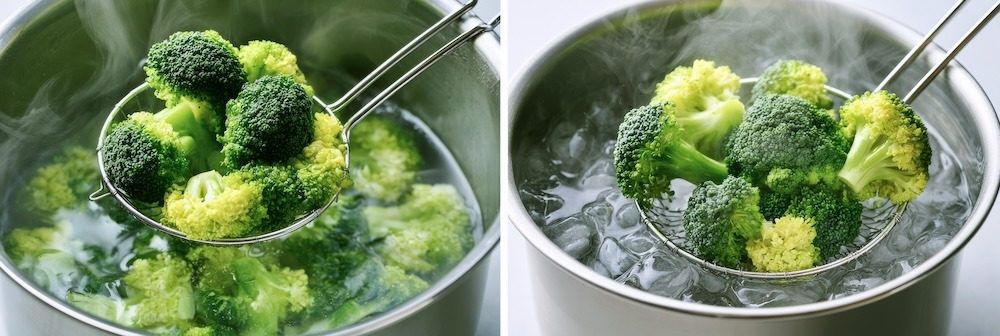
Bright green broccoli florets being lifted from boiling salted water with a wire spider into an ice bath
Blanching the Broccoli

Why You Should Blanch the Broccoli — and How Chinese Restaurants Do It

The broccoli problem in home stir fry is almost always the same: by the time it’s cooked through, it’s olive green and soft. The vivid green, slightly crisp broccoli you get at a Chinese restaurant didn’t get that way from sitting in a wok for 4 minutes.

Restaurant kitchens blanch their broccoli before service — briefly in well-salted boiling water, usually 60 to 90 seconds, then immediately into an ice bath to stop the cooking and lock in the color. That does three things: it par-cooks the broccoli so it needs only 60 seconds in the wok, it sets the chlorophyll and keeps the color bright green through the rest of the cooking process, and it removes some of the raw bitterness that broccoli can carry.

At home, the process is simple. Get a pot of well-salted water to a full boil while you’re prepping everything else. Drop the florets in for 60 to 90 seconds — not longer. Pull them out with a spider or slotted spoon, then drop them directly into a bowl of ice water. Leave them for a minute, drain well, and they’re ready. This step takes about 3 minutes in total and noticeably changes the finished dish.

The blanching water, by the way, is worth saving. If you’re making rice or noodles alongside, cook them in it — the slight saltiness and any flavor compounds from the broccoli are not nothing.

Start Here: What to Know Before You Cook

  • Use chicken thighs if you can. More fat, more flavor, more forgiving under high heat. Breasts work but require more attention — pull them the moment they're cooked through or they tighten up fast.
  • Marinate for at least 30 minutes. An hour is better. The cornstarch needs time to coat the chicken properly. Don't rush this step — it's doing the velveting work that makes the texture right.
  • Blanch the broccoli before you start cooking. It takes 3 minutes and changes the dish significantly. Vivid green, slightly crisp broccoli versus olive-colored, soft broccoli. Do it.
  • Reserve the marinade. It becomes the sauce. Don't discard it after the chicken comes out — set it aside and add it back at the end.
  • Mise en place is non-negotiable. Everything moves fast once the wok is hot. Have every ingredient prepped, measured, and within arm's reach before you turn on the heat.
  • High heat, not crowded pan. Cook the chicken in batches if your wok isn't large enough for a single layer with space between pieces. A crowded pan steams instead of sears.

Why This Recipe Works

  • The marinade is built to be the sauce. Chicken stock, soy, oyster sauce, dry sherry, and cornstarch — every ingredient is doing double duty. It tenderizes the chicken while it marinates and thickens into a glossy sauce when it hits the hot wok at the end.
  • Cornstarch velvets the chicken. The coating sets on contact with hot oil, sealing in moisture before the interior has a chance to dry out. This is why restaurant chicken has that silky texture and home versions often don't.
  • Dry sherry adds depth without sweetness. It deglazes any fond from the wok and adds a dry, slightly nutty note that rounds out the soy and oyster sauce. Rice wine is the traditional substitute — both work.
  • Oyster sauce is the umami anchor. Soy sauce alone is salty and one-dimensional. Oyster sauce adds sweetness, depth, and a thick body that gives the finished sauce its restaurant-style coating ability.
  • Blanched broccoli finishes in 60 seconds. Par-cooked and shocked, the broccoli only needs to heat through in the wok — not cook from raw. This keeps it green, keeps it crisp, and keeps the wok temperature from dropping.
  • Cashews go in last. Added at the very end, they stay crunchy — providing textural contrast against the tender chicken and soft vegetables. They also add a richness that rounds out the soy-oyster flavor profile in a way that's easy to overlook until you try the dish without them.
A wide bowl of chicken and broccoli stir fry over steamed jasmine rice, golden-edged chicken thigh strips and vivid green broccoli florets
Print Recipe
5 from 1 vote

Chicken and Broccoli Stir-Fry

Chicken and broccoli stir-fry built on velvety chicken thighs, blanched broccoli, and a marinade that does double duty as the sauce — with cashews added at the end for crunch and the depth of flavor the dish earns rather than fakes.
Prep Time30 minutes
Cook Time15 minutes
Total Time45 minutes
Course: Main Course
Cuisine: American
Keyword: stir fry
Servings: 3 people
Calories: 548kcal

Equipment

  • large pot to blanch broccoli
  • Wok heavy skillet

Ingredients

Marinade

  • ¼ cup chicken stock
  • ¼ cup dry sherry or rice wine
  • 2 tablespoons soy sauce
  • 2 tablespoons oyster sauce
  • 1 tablespoon cornstarch
  • 1 teaspoon sesame oil
  • 3 chicken breasts boneless, sliced into thin strips

Other Ingredients

  • 3 cloves garlic minced
  • 1 tablespoon ginger minced
  • ¼ teaspoon crushed red pepper flakes
  • 3 tablespoons oil
  • 1 bunch broccoli cut into florets
  • 1 red pepper julienne
  • 1 large onion cut into chunks
  • ¼ cup halved cashew nuts

Instructions

Make the Marinade and Marinate the Chicken

  • In a medium bowl, whisk together the chicken stock, dry sherry, soy sauce, oyster sauce, cornstarch, and sesame oil until the cornstarch is fully dissolved — no lumps.
  • Add the chicken thigh strips and toss to coat evenly. Cover and refrigerate for at least 30 minutes, ideally an hour.
    The cornstarch is coating each strip as it sits, doing the velveting work that keeps the chicken tender under high heat.
  • While the chicken marinates, prep everything else — cut the broccoli into florets, julienne the red pepper, cut the onion into chunks, mince the garlic and ginger. Have the cashews measured and ready. By the time the chicken is done marinating, nothing should be left to prep.

Blanch the Broccoli

  • Bring a large pot of water to a full boil and salt it generously. While it heats, prepare an ice bath — a large bowl of cold water with a handful of ice cubes.
  • Drop the broccoli florets into the boiling water for exactly 60 to 90 seconds — no longer.
  • Lift them out with a spider or slotted spoon and place them directly into the ice bath.
    Leave for one minute, then drain well and pat dry with paper towels.
    The broccoli should be vivid green and slightly firm — par-cooked but not done. It finishes in the wok.

Set Up Your Mise en Place

  • This is not optional in stir fry. Once the wok is hot, everything moves in under 10 minutes, and there's no time to stop and chop.
    Arrange your ingredients in the order they go into the wok: chicken, garlic and ginger together, red pepper and onion, blanched broccoli, reserved marinade, and cashews.
    Everything within arm's reach.

Heat the Wok

  • Set your wok or largest heavy skillet over high heat. Let it heat for 2 full minutes.
  • It's ready when a drop of water flicked onto the surface evaporates instantly.
  • Add 2 tablespoons of oil and swirl to coat. The oil should shimmer immediately.

Sear the Chicken in Batches

  • Remove the chicken from the marinade and set the marinade aside — you'll need it.
  • Pat the chicken strips lightly dry with paper towels. Add them to the wok in a single layer with space between each piece.
  • Do not crowd the pan — if your wok isn't large enough, cook in two batches. A crowded wok drops the temperature immediately and steams the chicken rather than searing it.
  • Cook without moving for 2 minutes until the underside is golden. Toss and cook for another 1 to 2 minutes until the chicken is just cooked through — no longer pink at the center but still moist.
  • Transfer to a plate. The chicken will finish cooking when it returns to the sauce at the end — pull it slightly early rather than late.

Cook the Aromatics

  • Add the remaining tablespoon of oil to the hot wok.
    Add the garlic and ginger together and stir constantly for about 10 seconds — just until fragrant.
    This window is short. Garlic burns fast in a hot wok; keep it moving.

Add the Vegetables

  • Add the red pepper and onion to the wok. Stir fry over high heat for 2 minutes until slightly softened but still with some bite.
  • Add the blanched broccoli and toss everything together for 60 seconds — the broccoli is already par-cooked and just needs to heat through.
    You're looking for vegetables that are tender but not limp, with color still intact.

Add the Marinade & Return the Chicken

  • Pour the reserved marinade over the vegetables and stir quickly — the cornstarch will begin thickening immediately on contact with the heat.
  • Add the chicken back in and toss everything together for 60 to 90 seconds until the sauce has thickened enough to coat the back of a spoon and cling to the chicken and vegetables.
    If the sauce seems too thick, add a small splash of chicken stock. If too thin, let it reduce for another 30 seconds.

Add the Cashews & Serve

  • Remove the wok from the heat and toss in the cashews. Stir once or twice to distribute them evenly — they don't need cooking, just warming through.
  • Serve immediately over steamed jasmine rice. This dish does not hold well; the cashews soften, and the broccoli continues to cook from residual heat if it sits.

Notes

Nutritional information is automatically calculated using the WP Recipe Maker nutrition database and should be considered only an estimate. Actual values may vary depending on ingredient brands, product variations, substitutions, and portion sizes.

Nutrition

Calories: 548kcal | Carbohydrates: 28g | Protein: 57g | Fat: 23g | Saturated Fat: 3g | Polyunsaturated Fat: 6g | Monounsaturated Fat: 11g | Trans Fat: 0.1g | Cholesterol: 145mg | Sodium: 1376mg | Potassium: 1723mg | Fiber: 7g | Sugar: 8g | Vitamin A: 2574IU | Vitamin C: 239mg | Calcium: 135mg | Iron: 3mg

What Most Cooks Get Wrong with Chicken Stir Fry

  • Skipping the marinade time. Ten minutes is not enough. The cornstarch needs time to penetrate the surface of the chicken. Thirty minutes minimum — an hour if you have it. The texture difference is significant.
  • Not blanching the broccoli. Raw broccoli in a home wok takes 4 to 5 minutes to cook through. By then the chicken is overcooked, the aromatics are bitter, and the broccoli is olive green. Blanch it first.
  • Using chicken breast without adjusting the technique. Breast meat has almost no fat buffer. It goes from perfectly cooked to dry in about 30 seconds at wok temperature. If you use breasts, pull them slightly underdone on the first cook — they finish when they go back into the sauce.
  • Discarding the marinade. The marinade is the sauce. It's built specifically to function as both. If you've been throwing it out after the chicken comes out, you've been making a different — and thinner — dish.
  • Adding aromatics to a cold pan. Garlic and ginger go into already-hot oil, not a warming pan. They need the immediate high heat to bloom their flavor compounds. In a cold or warm pan they just slowly cook without releasing their aromatics properly.
  • Crowding the chicken. If the pieces are touching in the wok, they steam instead of sear. You lose the Maillard browning that adds flavor and you end up with pale, soft chicken instead of golden-edged pieces. Cook in batches — it takes an extra 3 minutes.

Quick Fixes & Pro Tips

  • Sauce too thin? Mix half a teaspoon of cornstarch with a tablespoon of cold water, stir it into the sauce, and give it 60 seconds over medium-high heat. It tightens quickly.
  • Sauce too salty? Add a small splash of chicken stock and a pinch of sugar. Both dilute and round out excess salt without flattening the flavor.
  • Chicken going dry? You're either using breast and cooking it too long, or your wok isn't hot enough and the chicken is steaming rather than searing. Switch to thighs and get the pan properly hot before anything goes in.
  • Broccoli going soft and grey? It went in the wok raw and cooked too long. Blanch it next time — 60 to 90 seconds in boiling water, ice bath, drain — and it only needs 60 seconds in the wok to finish.
  • Slicing chicken thinly is easier if it's partially frozen. 15 to 20 minutes in the freezer firms the meat enough that thin, even strips are much easier to cut. This is worth doing especially with thighs, which are harder to slice cleanly than breast.
  • No dry sherry? Rice wine (Shaoxing) is the traditional substitute and produces a slightly more authentic flavor. Dry vermouth also works in a pinch — avoid cooking sherry, which is salted and will overseason the dish.

What Oyster Sauce Is Doing in This Dish

Oyster sauce is made from reduced oyster extracts, soy sauce, and a small amount of sugar. The flavor is deeply savory with a natural sweetness and a thick, coating consistency that soy sauce alone can’t produce. In this recipe, it’s the ingredient that gives the sauce its body and its restaurant-quality depth.

If you don’t have it or want a substitute, here’s what actually works:

  • Hoisin and soy sauce in equal parts — the closest match in flavor and consistency. Hoisin adds sweetness and thickness that mirrors the oyster sauce profile well.
  • Mushroom sauce (vegetarian oyster sauce) — available at any Asian grocery store. Nearly identical consistency, similar umami depth, no seafood. The right call if you’re cooking for vegetarians or vegans.
  • Soy sauce with a small amount of sugar — simple and functional. Adds the sweetness without the thickness. The sauce will be thinner, but the flavor is in the right direction.


What doesn’t work well: fish sauce. It’s too sharp and too salty for this application — it overwhelms rather than deepens.

What to Serve With Chicken and Broccoli Stir Fry

  • Steamed jasmine rice. The default and the right call. Mild, slightly sticky, absorbs the sauce without competing with it. Start the rice before you do anything else.
  • Lo mein or rice noodles. If you want noodles instead of rice, cook them just before the stir fry finishes and toss everything together in the wok for the last 60 seconds.
  • Simple cucumber salad. Thinly sliced cucumber with rice vinegar, sesame oil, and a pinch of sugar. Cool and acidic against the rich, savory stir fry.
  • Miso soup. Light, warming, and complementary to the soy-oyster flavor profile. Takes 5 minutes if you keep white miso paste in the fridge.
  • Wine — off-dry Riesling. A German Kabinett or Alsatian Riesling has enough residual sweetness to handle the oyster sauce and enough acidity to cut through the richness of the thighs.
  • Beer — cold lager. Tsingtao or any clean, cold lager. Low bitterness, high refreshment, zero conflict with the sauce.

Storage & Make-Ahead

  • Store stir fry and rice separately. Rice left under the stir fry overnight absorbs all the sauce. Keep in separate containers and combine when reheating.
  • Refrigerator. Keeps well for up to 3 days tightly covered. The flavors deepen overnight — day-two leftovers from this dish are genuinely good.
  • Reheating. In a wok or skillet over medium-high heat with a splash of chicken stock to loosen the sauce. Avoid the microwave — it makes the chicken rubbery and the broccoli limp.
  • Best make-ahead move. Marinate the chicken and blanch the broccoli the night before. Store separately in the fridge. Day-of cooking time drops to about 15 minutes.
  • Freezing. Not recommended. The texture of the chicken and broccoli both suffer significantly after freezing. Make it fresh or eat within 3 days.
Thighs or breasts — what do you use for stir fry? It's one of those kitchen debates that never quite settles. I've made this both ways and thighs win in my house every time, but I know plenty of good cooks who disagree. Tell me your preference and why in the comments.

Frequently Asked Questions

Q: Why do you recommend chicken thighs over breasts? Thighs have more intramuscular fat, which means they stay juicier under the high heat of stir fry cooking. Breast meat has almost no fat buffer — it goes from perfectly cooked to dry very quickly at wok temperatures. Everyone in my house prefers thighs for exactly this reason, and it’s what I’d recommend for most chicken stir fry recipes. That said, breasts work fine if that’s what you prefer — just pull them the moment they’re no longer pink and don’t let them sit in the wok any longer than necessary.

Q: What is velveting and do I have to do it? Velveting is a Chinese technique where protein is coated in cornstarch — sometimes with egg white — before cooking, to create a silky, tender texture. The cornstarch in this marinade is a simplified home version of the same principle. You don’t have to do it, but the texture of the chicken will be noticeably less tender without it. It adds no meaningful prep time since the chicken is marinating anyway.

Q: Do I have to blanch the broccoli? You don’t have to, but it changes the dish significantly. Raw broccoli takes 4 to 5 minutes in a home wok to cook through — by which point everything else is overcooked and the broccoli is grey-green. Blanching takes 3 minutes and produces vivid green, slightly crisp broccoli that finishes in 60 seconds in the wok. It’s the technique Chinese restaurants use and it’s worth doing.

Q: Can I use frozen broccoli? Yes, but thaw and dry it completely first. Frozen broccoli releases water when it hits the hot wok, which drops the temperature and produces steamed rather than stir-fried results. Pat it as dry as you can before it goes in. Fresh broccoli will always give a better result here.

Q: What can I substitute for dry sherry? Shaoxing rice wine is the traditional Chinese substitute and produces a slightly more authentic flavor. Dry vermouth works in a pinch. Avoid cooking sherry — it’s salted and will overseason the dish. If you have none of the above, a splash of dry white wine is the simplest fallback.

Q: Why do the cashews go in at the very end? Two reasons. First, they’re already roasted — they don’t need cooking, just warming through. Second, adding them last keeps them crunchy. Cashews cooked in the sauce from the beginning absorb liquid and turn soft. Added at the end, they stay crisp and provide the textural contrast that makes them worth including.

Q: Can I add other vegetables? Yes — this recipe is flexible. Bell peppers, snap peas, carrots, mushrooms, and bok choy all work well. The rule is to add vegetables in order of density: harder vegetables first, quicker-cooking ones last. Don’t add so many that the pan gets crowded — too many vegetables at once drops the temperature and you get a stew rather than a stir fry.

Q: Is this dish gluten-free? Not as written — soy sauce contains wheat and oyster sauce often does too. For a gluten-free version, substitute tamari for the soy sauce and use a gluten-free oyster sauce or mushroom sauce. Everything else in the recipe is naturally gluten-free.

Explore More on This Topic

2 Responses

  1. May I use a couple of your photos for some exam questions for a Hospitality course. I can acknowledge the source. The material is purely for assessment purposes (to make questions more interesting) and are not sold on in any way or form. Do I have your permission to use 3 to 4 photos?

    Dr. Leonard, you do NOT have permission to use any photos but thank you for asking.

Leave a Reply

Your email address will not be published. Required fields are marked *

Recipe Rating


This site uses Akismet to reduce spam. Learn how your comment data is processed.