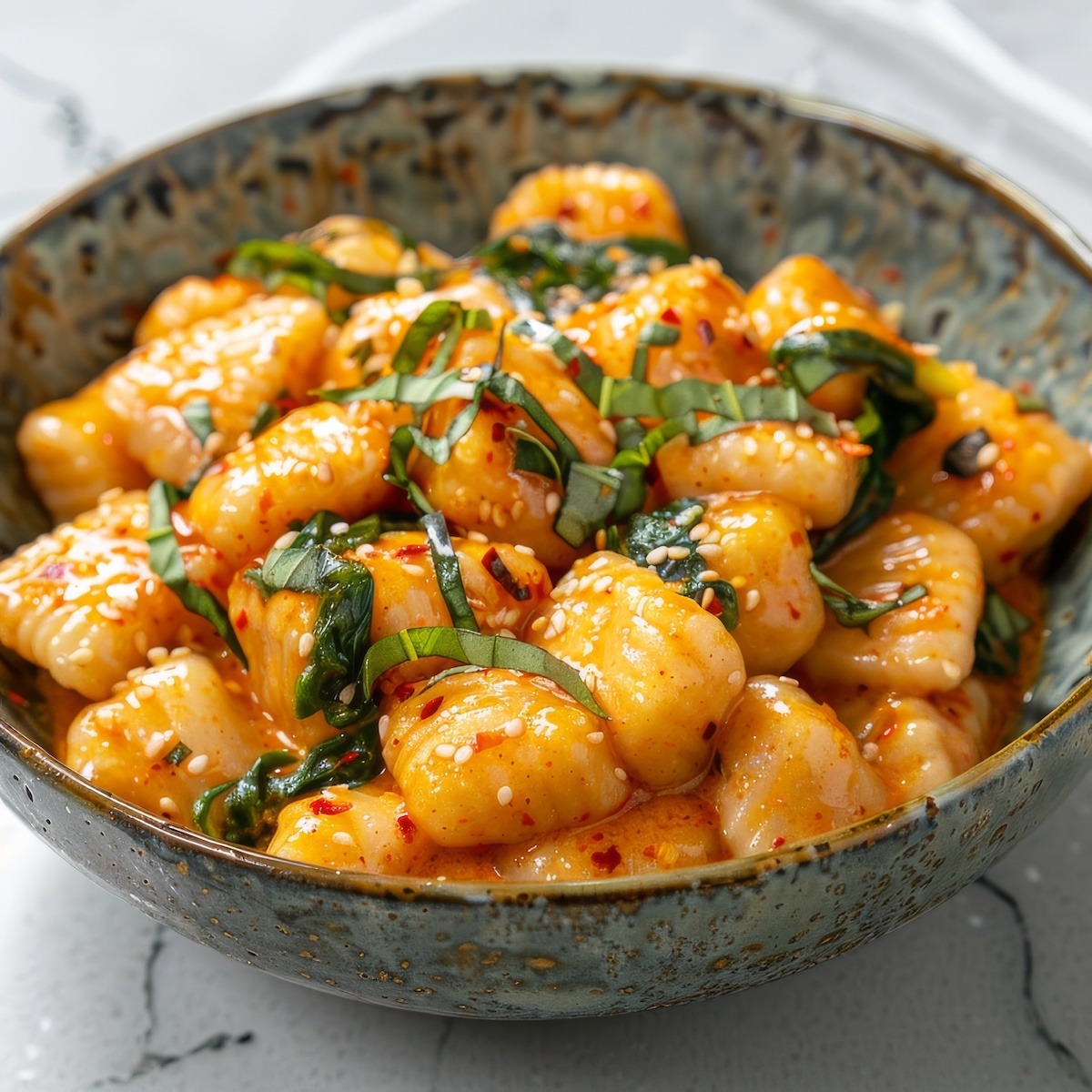

Creamy Gochujang Gnocchi Recipe: A Spicy-Sweet Delight

Spice Up Pasta Night: Creamy Gochujang Gnocchi Recipe

Are you looking to spice up your pasta nights with a unique twist? This creamy gochujang gnocchi recipe perfectly fuses Italian comfort food and bold Korean flavors. Gochujang, a staple in Korean cuisine, brings a rich, spicy-sweet kick that perfectly complements the soft, pillowy gnocchi. Paired with a creamy sauce, this dish offers a delightful balance of heat and comfort, making it a standout choice for any meal.

This recipe shows you how to create a luscious, velvety sauce using gochujang, cream, and a hint of garlic, ensuring each bite is flavorful. The gnocchi, which can be homemade or store-bought, absorbs the sauce beautifully, creating a mouthwatering dish sure to impress.

Whether you’re a seasoned chef or a home cook looking to try something new, this creamy gochujang gnocchi is a breeze to prepare. Its simplicity and the promise of restaurant-quality results will surely boost your confidence in the kitchen. Perfect for a cozy dinner at home or a special occasion, it’s a dish that brings a touch of global fusion to your table. Ready to dive into this delicious culinary adventure? 

Creamy Gochujang Gnocchi

Course: Main Course
Cuisine: Korean
Keyword: gnocchi, Gochujang

Ingredients

For the Gnocchi

  • 1 pound potato gnocchi

For the Sauce

Instructions

Cook the Gnocchi

  • Bring a large pot of salted water to a boil. Add the gnocchi and cook according to package instructions until they float to the surface, about 2-3 minutes. Drain and set aside.

Prepare the Sauce

  • In a large skillet, heat the olive oil over medium heat. Add the minced garlic and sauté until fragrant, about 1 minute.
  • Stir in the gochujang and cook for another 1-2 minutes, allowing the flavors to meld.

Combine Ingredients

  • Pour in the heavy cream and chicken broth, stirring to combine. Bring the mixture to a gentle simmer, then add the soy sauce and honey if using. Let the sauce simmer for a few minutes until it thickens slightly.

Mix in Gnocchi

  • Add the cooked gnocchi to the skillet, tossing gently to coat them in the creamy sauce. Cook for another 2-3 minutes, allowing the gnocchi to absorb the flavors.

Season and Serve

  • Season with salt and pepper to taste. If desired, sprinkle grated Parmesan cheese on top and garnish with fresh cilantro or green onions.

Enjoy

  • Serve the creamy gochujang gnocchi hot, and enjoy the delightful blend of spicy, creamy, and savory flavors!

Notes

This dish is perfect for a cozy night in or as a special treat to impress your guests with a unique and flavorful twist on traditional gnocchi. Enjoy!

What Is Gochujang?

Gochujang is a staple condiment in Korean cuisine, renowned for its rich, spicy-sweet flavor profile. It’s a fermented chili paste made from red chili peppers, glutinous rice, fermented soybeans, and salt. The paste undergoes a fermentation process that can last several months to develop its complex flavors.

Regarding taste, gochujang offers a unique combination of spiciness from the chili peppers, sweetness from the glutinous rice, and a savory umami depth from the fermented soybeans. Its thick and sticky texture makes it versatile for cooking and condiment use.

This versatile ingredient adds heat and depth to dishes and serves as a base for various sauces, marinades, and dips in Korean cooking. Its adaptability is a key component in iconic dishes like bibimbap, tteokbokki, and Korean barbecue marinades. The possibilities with gochujang are endless, inspiring you to create your own unique culinary masterpieces.

Gochujang’s popularity has transcended Korean cuisine, gaining recognition globally for its bold flavors and ability to elevate a wide range of dishes. Whether exploring new recipes or enhancing your favorite meals, using gochujang adds a distinctive taste that is part of a global culinary trend. It’s a delightful twist to any culinary creation that you won’t want to miss out on.

Gochujang History

Gochujang has a rich history that dates back centuries and is deeply rooted in Korean culture and cuisine. The origins of gochujang can be traced to the Three Kingdoms period (57 BCE – 668 CE), though it became more prominent during the Joseon Dynasty (1392-1897). 

Gochujang’s journey from a traditional Korean household staple to a global culinary phenomenon highlights its enduring appeal and versatility. Whether used in traditional Korean dishes or as an innovative ingredient in fusion cuisine, gochujang continues to captivate palates worldwide. Here’s a closer look at its historical development:

Period/Theme Event/Detail Description
Early Origins Ancient Period Fermented soybean pastes existed in Korea since ancient times; fermentation was used for preservation and flavor enhancement.
Early Origins Introduction of Chili Peppers Chili peppers introduced in the 16th century via Japan and China; enabled creation of modern gochujang.
Development & Popularization Joseon Dynasty Gochujang production became refined; made with chili peppers, soybean paste, glutinous rice, and salt; recipes passed down through generations.
Development & Popularization Fermentation Process Traditionally fermented in earthenware pots (jangdok) for extended periods; flavors influenced by local climate and environment.
Modern Era Industrialization 20th-century mass production made gochujang widely accessible; ensured consistency and availability year-round.
Modern Era Global Popularity Korean cuisine spread worldwide; gochujang became popular internationally for its spicy, umami-rich flavor.
Cultural Significance Culinary Tradition Gochujang used in many Korean dishes (bibimbap, tteokbokki, stews, marinades); represents Korea’s culinary heritage and love for bold flavors.
Cultural Significance Health Benefits Fermentation adds probiotics and nutritional value; traditionally valued for aiding digestion and enhancing health.

Substitutions

If you don’t have gochujang on hand, there are several alternatives you can use to mimic its unique spicy, sweet, and umami-rich flavor. These substitutes won’t perfectly replicate gochujang’s unique flavor, but they will provide a similar balance of spiciness, sweetness, and umami that can work well in many recipes. Here are some substitutes:

Substitute Ingredients Instructions
Sriracha and Miso Paste 2 tbsp Sriracha, 1 tbsp miso paste Mix Sriracha and miso paste until well combined; provides a similar spicy and umami flavor to gochujang.
Red Pepper Flakes, Soy Sauce, and Sugar 1 tbsp red pepper flakes, 2 tbsp soy sauce, 1 tsp sugar Combine ingredients to create a spicy, slightly sweet paste. Adjust quantities to taste.
Chili Paste and Honey 2 tbsp chili paste (such as sambal oelek), 1 tbsp honey Mix chili paste and honey for a balanced heat and sweetness similar to gochujang.
Harissa and Soy Sauce 2 tbsp harissa, 1 tbsp soy sauce Combine harissa with soy sauce for added umami depth to the spicy harissa.
Doubanjiang and Sugar 2 tbsp doubanjiang, 1 tsp sugar Mix doubanjiang with sugar to sweeten the spicy, savory paste.
Homemade Gochujang Substitute 2 tbsp red pepper flakes, 1 tbsp miso paste, 1 tbsp soy sauce, 1 tbsp honey or sugar, 1 tsp rice vinegar Combine all ingredients in a bowl and mix well to form a paste. Adjust quantities to taste.

Gnocchi

Gnocchi (pronounced nyoh-kee) is an Italian pasta traditionally made from potatoes, flour, and sometimes eggs. These small dumplings are known for their soft, pillowy texture and are typically served with various sauces, from creamy cheeses to tangy tomato-based options.

Making gnocchi involves cooking and mashing potatoes, mixing them with flour and often eggs to form a dough, which is then shaped into small pieces. These pieces are usually scored with a fork to create ridges that help sauces adhere better. Gnocchi can vary in size and shape depending on regional traditions in Italy, but they are generally similar in texture—tender yet slightly chewy.

Once formed, gnocchi are boiled briefly until they float to the water’s surface, indicating they are cooked. They are then served with the sauce of choice, making them a versatile base for many Italian dishes. Gnocchi can also be made with alternative ingredients, such as ricotta cheese or semolina flour, offering different textures and flavors while retaining their characteristic softness.

2 Responses

  1. 5 stars
    Mr. Jones – Stumbled upon this recipe today, and it looked very promising. So, I went shopping and was able to gather the missing ingredient: Gouchujang Paste. The recipe came together easily on the first attempt, and was finished with green onions, cilantro and a some freshly ground black pepper. Absolutely love this! Thanks for sharing.

Leave a Reply

Your email address will not be published. Required fields are marked *

Recipe Rating


This site uses Akismet to reduce spam. Learn how your comment data is processed.